
A Rotary Actuator With Counterbalance Valve becomes useful when the load can influence rotation strongly enough to drive the actuator instead of simply being driven by it. This distinction matters because not every rotary mechanism requires counterbalance control, and adding a valve does not automatically solve drift, insufficient torque or poor positioning.
The more useful question is whether the machine contains stored gravitational or mechanical energy that can continue to rotate the load after hydraulic command is reduced. Platforms with offset centers of gravity, heavy booms, ramps, hatches and rotating attachments can all create this condition. In these applications, controlling the load may be more important than simply increasing actuator torque.
Start by Asking Whether the Load Can Drive the Actuator
Consider a rotary actuator moving a heavy structure through a limited angle. At the beginning of the movement, the actuator may be working against gravity and providing most of the torque required to move the structure. At another point in the rotation, however, the relationship between gravity and the load can change.
Once the center of gravity moves into a different part of the arc, gravity may begin assisting rotation instead of resisting it. The same load that previously required actuator torque can now start driving the actuator forward. This is an overrunning condition, and it changes the hydraulic-control problem completely.
A larger actuator does not remove this behavior because the issue is no longer whether enough torque is available. The problem becomes how to prevent stored energy in the mechanism from accelerating rotation beyond the commanded speed.
How the Load Can Change Through One Rotation
The actuator may experience very different conditions at different points in the same movement.
|
Rotation Condition |
What the Actuator Is Doing |
Main Control Concern |
|
Load resisting rotation |
Actuator drives against gravity |
Sufficient drive torque |
|
Near balanced position |
Lower external moment |
Smooth low-speed control |
|
Gravity assisting rotation |
Load begins driving actuator |
Overrunning load control |
|
Approaching mechanical stop |
External torque may rise suddenly |
Pressure and torque protection |
This is why one maximum-torque number cannot fully describe a gravity-affected rotary application. The load moment through the complete rotation is often more useful than a single peak value.
When a Counterbalance Valve Makes Sense
A counterbalance valve is particularly relevant when the external load can put energy back into the hydraulic system.
Typical situations include:
● Gravity-assisted rotation where the load tends to accelerate the actuator
● Boom or platform movement with an offset center of gravity
● Hydraulic-line failure while the actuator is supporting a load
● External forces attempting to back-drive the actuator
● Heavy ramps or attachments that can move under their own weight
● Applications where load direction changes during rotation
In these situations, controlled resistance on the loaded side can help prevent the mechanism from moving faster than the hydraulic command intends.
The important point is that counterbalance control responds to the behavior of the load, not simply to the size of the actuator.
What a Counterbalance Valve Does Not Solve
Counterbalance control should not be used to hide a mechanical or hydraulic problem elsewhere in the machine. If an actuator is too small for the actual torque or external moment, adding a valve does not increase structural capacity. Radial, axial and overturning loads still need to remain within the limits of the actuator and mounting system.
The same distinction applies to drift. A rotary mechanism can slowly move after stopping because of internal actuator leakage, directional-valve leakage, temperature change or another hydraulic path. A counterbalance valve may contribute to load holding, but it should not automatically be treated as a guaranteed anti-drift solution.
Flow control is another separate function. Hydraulic flow still determines commanded rotation speed, while the counterbalance valve controls how much influence the external load is allowed to have on that movement.
Too Much Counterbalance Can Create a Different Problem
More back pressure is not automatically better. If a counterbalance valve is set too aggressively, the actuator may require excessive pilot pressure before movement begins, producing hesitation, poor low-speed response or unnecessary pressure loss.
That pressure loss is converted into heat. A machine may therefore appear stable during a short test but become hotter during repeated operation. As oil temperature rises, viscosity and leakage behavior change, which can affect the rest of the hydraulic system.
The correct setting should provide enough resistance to control an overrunning load while allowing predictable, efficient rotation during normal commanded movement. The target is controlled motion, not maximum restriction.
Motion Symptoms Can Reveal Poor Load-Control Matching
Several operating symptoms can help identify where the problem may be:
● Rotation accelerates only in one section of the arc — the mechanism may be entering an overrunning condition.
● The actuator hesitates before moving — counterbalance restriction or pilot pressure may be too high.
● Pressure rises sharply during normal motion — the valve may be creating unnecessary resistance.
● Rotation is stable while moving but the load drifts after stopping — internal or control-valve leakage may need attention.
● The mechanism behaves differently in opposite directions — external load moment may not be symmetrical.
The relationship between the symptom and the rotation angle is particularly useful. If the same problem appears at the same point every cycle, load geometry is likely influencing the hydraulic behavior.
Hose Failure Is Different From Normal Rotation
During normal operation, the pump and directional valve actively control pressure and flow. If a hydraulic hose fails, that control path may disappear while the mechanical load still contains stored energy.
This distinction is important for elevated platforms, booms, ramps and other gravity-influenced structures. Without suitable load control, the external load may accelerate the actuator even though the operator is no longer commanding movement.
A counterbalance arrangement can help maintain resistance on the loaded side, but it remains only one part of machine-level safety design. Mechanical stops, mounting capacity, hose routing and structural strength still need to support the same failure scenario.
Replacement Actuators Need the Original Hydraulic Logic
A replacement rotary actuator can fit the same bolt pattern and still change the way the machine behaves. Mechanical interchangeability only confirms that the component can be installed; it does not guarantee that the hydraulic response will remain the same.
If the original actuator uses a counterbalance valve and the replacement does not, an overrunning load may no longer be controlled in the same way. Even if both products include counterbalance control, differences in valve setting, pilot ratio, actuator displacement or port arrangement can change starting, stopping and load-holding behavior.
For replacement projects, several points should therefore be compared together:
● Rotation angle
● Required torque
● Original valve arrangement
● Pilot ratio or valve behavior where known
● Hydraulic ports
● Mounting dimensions
● Load direction and center-of-gravity position
This provides a more reliable basis for replacement than bolt pattern alone.
WEITAI Options for Load-Controlled Rotary Motion
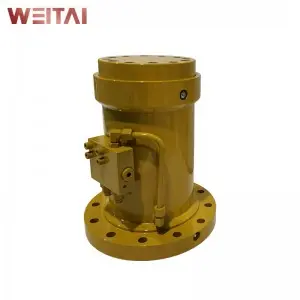
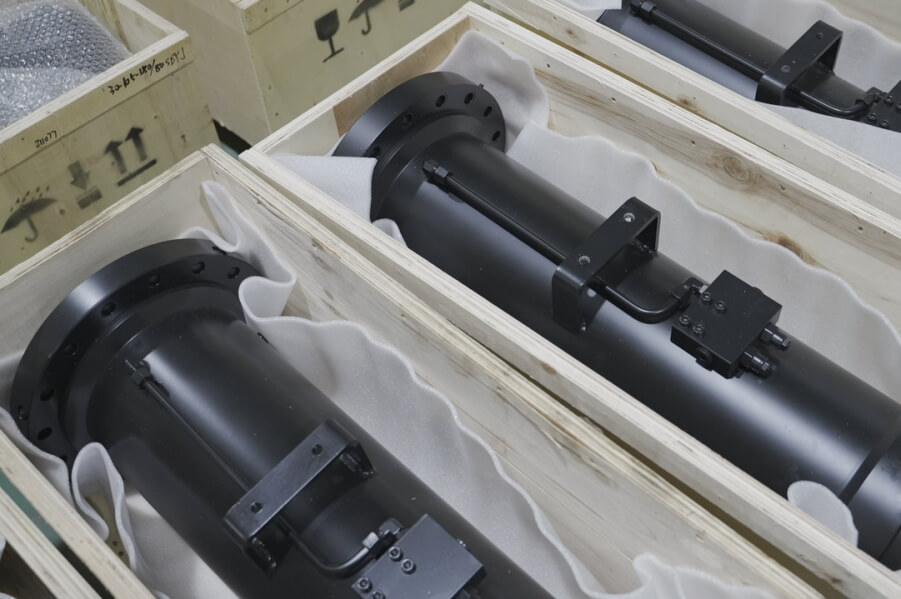
For mobile and industrial equipment requiring high torque and controlled rotary movement, WEITAI provides helical hydraulic rotary actuator configurations that can be matched to the load condition of the machine.
The WL30 Series is designed for heavy-duty rotary applications and is available with different torque and mounting configurations. Depending on the application, an optional counterbalance valve can be considered where gravity, an offset load or another external force may attempt to drive the actuator.
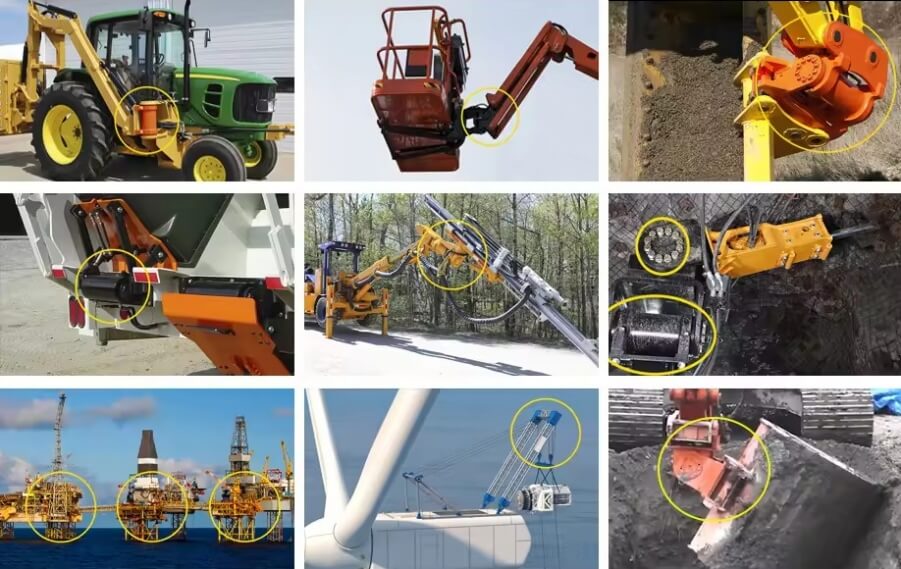
Typical applications can include boom positioning, platform rotation, access-ramp movement and attachment rotation. In these cases, the valve should be considered as part of the actuator and hydraulic system rather than as an isolated accessory.
Conclusion
A Rotary Actuator With Counterbalance Valve is most useful when the external load can drive the actuator, not simply when the machine is heavy or the actuator produces high torque. Gravity-driven rotation, changing load moment, external back-driving and hydraulic-line failure are the conditions that make load control relevant.
At the same time, a counterbalance valve should not be expected to correct an undersized actuator, poor mounting or unrelated leakage. Understanding how the load behaves through the full rotation provides a much better basis for deciding whether counterbalance control is actually needed.
FAQ
How do I know whether my rotary actuator needs a counterbalance valve?
A counterbalance valve is most relevant when gravity or another external force can drive the actuator faster than the hydraulic command intends.
Will a counterbalance valve stop all rotary actuator drift?
No. Drift can also result from internal actuator leakage, directional-valve leakage or other hydraulic paths.
Can a counterbalance valve make the system run hotter?
Yes. Excessive restriction creates pressure loss, which converts hydraulic energy into heat.
How much does a Rotary Actuator With Counterbalance Valve cost?
Rotary Actuator With Counterbalance Valve price depends on actuator torque, rotation angle, mounting configuration, valve requirement, hydraulic conditions and customization.
Post time: Nov-18-2026