
In modern construction and earthmoving projects, productivity is no longer determined only by machine power, but by how efficiently equipment can switch between different working tasks. Excavators are expected to dig, break, lift, grade, and handle materials within the same working cycle, which makes attachment flexibility a critical performance factor. Hydraulic quick hitch couplers have become a key solution to this challenge because they allow fast, safe, and controlled attachment changes without manual intervention, significantly improving overall jobsite efficiency.
Among these systems, the WPT07 hydraulic tilt coupler represents an advanced configuration that not only enables quick attachment switching but also introduces hydraulic tilting capability, allowing operators to adjust working angles directly from the cab. This combination transforms how excavators perform in complex construction environments.
What problems do traditional attachment systems create in construction work?
In conventional excavation operations, changing attachments requires stopping the machine, leaving the cab, and manually removing and installing pins. This process creates several operational limitations that directly affect productivity and safety.
The most critical issue is downtime, because every attachment change interrupts workflow and reduces effective machine utilization. In addition, manual handling of heavy attachments exposes workers to physical risks, especially in uneven or high-traffic construction sites. Another limitation is precision loss, as manual alignment often introduces small installation errors that can affect attachment stability during operation.
Hydraulic quick hitch systems are designed to eliminate these inefficiencies by converting attachment changes into a controlled hydraulic operation performed entirely from the operator cabin.
How does a hydraulic quick hitch coupler improve excavation efficiency?
A hydraulic quick hitch coupler allows the operator to switch between different attachments such as buckets, breakers, grapples, and rippers within a very short time. Instead of physically removing pins, the hydraulic system locks and releases attachments through controlled pressure.
This leads to a direct improvement in working efficiency because the machine spends more time operating and less time idle. In multi-task construction environments, a single excavator can transition between different roles quickly, reducing the need for additional machinery on site.
Another important benefit is workflow continuity. When switching between digging and material handling tasks, operators can maintain consistent production cycles without long interruptions, which is particularly important in large-scale infrastructure projects where time efficiency directly affects project cost.
Why does tilt functionality significantly expand excavator capability?
The addition of tilt functionality in systems such as the WPT07 hydraulic tilt coupler introduces a new level of flexibility that goes beyond simple attachment switching. Tilt capability allows the working tool to rotate left and right, enabling more precise control of the working angle.
This is especially important in applications such as slope finishing, trench shaping, and landscape grading, where fixed-angle buckets are not sufficient. Instead of repositioning the entire machine to adjust working direction, the operator can simply adjust the tilt angle hydraulically.
This reduces repetitive machine movement, improves surface accuracy, and allows excavation in confined spaces where repositioning is difficult. In practical terms, tilt functionality reduces both labor intensity and rework rates, which directly improves project efficiency.
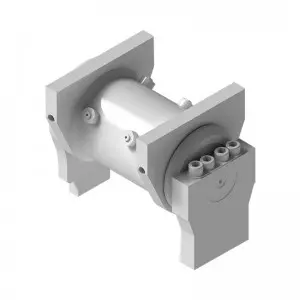
How does hydraulic structure improve reliability compared to mechanical systems?
Traditional mechanical couplers rely on physical pins and manual locking mechanisms, which are more susceptible to wear, misalignment, and contamination from dirt or debris. In contrast, hydraulic quick hitch systems use controlled fluid pressure to engage and lock attachments.
This hydraulic locking mechanism provides more consistent clamping force, which improves connection stability during operation. It also reduces mechanical wear because there are fewer moving mechanical parts exposed to external conditions.
In environments such as construction sites, where dust, mud, and vibration are constant factors, hydraulic systems provide a more stable and reliable solution for long-term use.
What role does structural design play in safety performance?
Safety is a major factor in modern construction equipment design, and hydraulic quick hitch systems significantly reduce operational risk compared to manual coupling methods.
Since all attachment changes are performed inside the cab, operators are no longer exposed to hazards such as falling objects or improper alignment during installation. The hydraulic locking system also ensures that attachments are fully secured before operation begins, reducing the risk of accidental detachment.
In addition, system feedback and locking confirmation improve operator awareness, ensuring that equipment is only used when properly engaged. This creates a more controlled and predictable working environment.
Where are hydraulic quick hitch and tilt couplers most commonly used?
Hydraulic quick hitch systems are widely used in a variety of construction and earthmoving applications where flexibility and efficiency are required. These include excavation work, road construction, pipeline installation, landscaping, demolition support, and urban infrastructure development.
In excavation projects, quick attachment switching allows operators to move seamlessly between digging and material handling. In road construction, tilt functionality enables precise slope shaping and surface leveling. In confined urban environments, the ability to adjust tool angle without repositioning the machine is especially valuable.
The versatility of systems like the WPT07 makes them suitable for both general construction and specialized engineering tasks.
Why are hydraulic quick hitch systems becoming industry standard?
The construction industry is shifting toward multi-functional machinery that can perform multiple tasks with a single base unit. This trend is driven by rising labor costs, tighter project schedules, and increasing demand for operational efficiency.
Hydraulic quick hitch systems align perfectly with these requirements because they reduce downtime, improve machine utilization, and increase overall productivity. At the same time, they enhance safety by minimizing manual intervention and reducing exposure to hazardous conditions.
As a result, hydraulic quick hitch technology is no longer considered an optional upgrade but is increasingly becoming a standard configuration for modern excavators.
FAQ
Q1: What is a hydraulic quick hitch coupler used for?
It is used to quickly connect and disconnect excavator attachments without manual pin removal, improving efficiency and reducing downtime.
Q2: What is the advantage of a hydraulic tilt coupler like WPT07?
It allows both fast attachment changes and hydraulic angle adjustment, improving precision and flexibility in excavation work.
Q3: Does tilt functionality improve excavation accuracy?
Yes, it allows operators to adjust the working angle directly, improving grading, slope shaping, and confined-space operations.
Q4: Are hydraulic quick hitch systems safer than manual systems?
Yes, because operators remain inside the cab during operation and hydraulic locking ensures secure attachment engagement before use.
Post time: Jun-18-2026