
A hydraulic tilt actuator is becoming an important component for modern construction attachments because it allows equipment to achieve controlled tilting movement in a compact and powerful way. For excavators, skid steer loaders, compact loaders, trenching machines, and other mobile equipment, attachment flexibility directly affects work efficiency. When the attachment can tilt smoothly and accurately, operators can complete grading, digging, trench shaping, slope finishing, material handling, and landscaping tasks with fewer machine movements.
Traditional attachment angle adjustment often depends on mechanical linkage, manual repositioning, or standard hydraulic cylinders. These methods can work in some situations, but they may require more space, more parts, and more maintenance. A hydraulic tilt actuator provides a more integrated solution by converting hydraulic pressure into rotary motion. It helps attachments move within a controlled angle range while keeping the equipment structure compact and efficient.
What Is a Hydraulic Tilt Actuator?
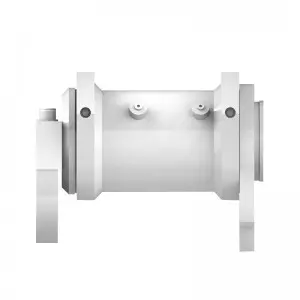
A hydraulic tilt actuator is a type of hydraulic rotary actuator designed to provide tilting movement. Instead of pushing and pulling in a straight line like a conventional hydraulic cylinder, it generates rotary motion around an axis. This makes it suitable for attachments that need angle adjustment rather than linear extension.
In construction machinery, a hydraulic tilt actuator can be installed between the machine arm and the attachment, or integrated into the attachment structure. It allows the bucket, grading tool, fork, clamp, or other attachment to tilt left and right or adjust its working angle. This movement helps operators work more precisely without constantly repositioning the whole machine.
Why Tilt Function Improves Jobsite Efficiency
On a construction site, time is often lost when operators need to reposition the machine repeatedly. For example, when shaping a slope or cleaning a ditch, a fixed bucket may require the excavator to move again and again to reach the correct angle. With a hydraulic tilt actuator, the operator can adjust the attachment angle directly from the cab.
This brings several practical benefits:
- Fewer machine repositioning movements
- More accurate grading and finishing
- Faster trench and ditch work
- Better control in narrow spaces
- Less ground disturbance
- Reduced operator fatigue
- Improved attachment versatility
For contractors, these advantages can help improve productivity and reduce labor time, especially on jobs that require careful angle control.
Compact Design for Modern Attachments
Construction equipment is becoming more compact and multifunctional. Many machines need to carry different attachments while keeping overall weight and structure under control. A hydraulic tilt actuator supports this trend because it can provide strong rotary movement within a relatively small installation space.
Compared with a linkage-based tilting system, a hydraulic tilt actuator can reduce external components and simplify attachment design. Fewer exposed parts can also reduce interference during operation, especially in confined working areas.
This compact structure is useful for:
- Mini excavators
- Compact excavators
- Skid steer loaders
- Backhoe attachments
- Grading buckets
- Tilt buckets
- Quick coupler systems
- Special construction tools
When the attachment structure is cleaner and more integrated, the machine can become easier to operate and maintain.
Strong Torque for Demanding Work
A hydraulic tilt actuator must provide enough torque to move the attachment under load. Construction attachments are often exposed to soil resistance, material weight, impact, and uneven working conditions. If the actuator does not have enough torque, the attachment may move slowly, lose position, or fail to perform reliably.
Strong torque output allows the actuator to support heavier attachments and tougher tasks. This is important for buckets, grapples, grading tools, and material handling attachments that must maintain a stable angle during operation.
The required torque depends on several factors:
- Attachment weight
- Working angle
- Hydraulic system pressure
- Load position
- Machine size
- Application type
- Operating frequency
Selecting the correct actuator torque helps ensure smooth and safe attachment movement.
Better Control and Operator Comfort
A good hydraulic tilt actuator should provide controlled, smooth, and repeatable movement. For tasks such as slope finishing or precision grading, sudden movement can affect work quality. Smooth angle adjustment helps operators make fine corrections while working.
Better control also improves operator comfort. Instead of using repeated machine movements to reach the correct angle, the operator can make small adjustments through the hydraulic control system. This can make the machine easier to use and improve working accuracy over long operating hours.
Applications of Hydraulic Tilt Actuators
Hydraulic tilt actuators are suitable for many construction attachment applications. They are especially useful where controlled angle adjustment can reduce manual work or improve precision.
Common applications include:
- Tilt buckets for excavators
- Grading buckets
- Ditch cleaning buckets
- Skid steer loader attachments
- Hydraulic quick couplers
- Landscaping tools
- Trenching attachments
- Road maintenance tools
- Material handling attachments
- Compact construction equipment tools
In these applications, the actuator helps the attachment adapt to different working angles without changing the whole machine position.
Important Selection Points
Choosing a hydraulic tilt actuator requires a clear understanding of machine and attachment requirements. The actuator must match the hydraulic system and mechanical design.
Important factors include:
- Required tilt angle
- Torque output
- Working pressure
- Attachment weight
- Mounting dimensions
- Shaft connection design
- Seal reliability
- Rotation smoothness
- Operating environment
- Compatibility with the host machine
If the actuator is used outdoors, sealing and corrosion protection are especially important. If the attachment works with high impact, structural strength and torque capacity should receive more attention.
Hydraulic Tilt Actuator vs. Standard Hydraulic Cylinder
A standard hydraulic cylinder can also create tilting movement when connected with a linkage system, but it often needs more space and more mechanical parts. A hydraulic tilt actuator provides rotation more directly.
A hydraulic tilt actuator may be the better choice when:
- The attachment needs compact design.
- Direct rotary movement is required.
- External linkage should be reduced.
- The machine works in narrow areas.
- Precise tilt control is important.
- Maintenance simplicity is preferred.
- The attachment must look cleaner and more integrated.
However, the final choice should still depend on equipment structure, cost target, available hydraulic pressure, and expected workload.
Conclusion
A hydraulic tilt actuator helps construction attachments become more flexible, efficient, and easier to control. By providing compact rotary motion, strong torque, and smooth angle adjustment, it allows operators to complete grading, digging, trenching, landscaping, and material handling tasks with fewer machine movements.
For excavators, skid steer loaders, compact loaders, and special construction attachments, the right hydraulic tilt actuator can improve jobsite productivity and equipment value. When torque, tilt angle, mounting structure, sealing performance, and working pressure are properly matched, the actuator becomes a key part of a modern and efficient hydraulic attachment system.
FAQ
What is a hydraulic tilt actuator?
A hydraulic tilt actuator is a hydraulic rotary component that provides controlled tilting movement for construction attachments and mobile machinery.
Why use a hydraulic tilt actuator on an excavator attachment?
It allows the attachment to tilt without constantly repositioning the machine, helping improve grading accuracy, trench work efficiency, and operator control.
Is a hydraulic tilt actuator better than a hydraulic cylinder?
It depends on the application. A hydraulic tilt actuator is often better for compact rotary movement, while a hydraulic cylinder is suitable for linear movement or linkage-based systems.
What should be considered when choosing a hydraulic tilt actuator?
Key factors include torque output, tilt angle, working pressure, mounting size, attachment weight, seal performance, and compatibility with the host machine.
Post time: Jun-25-2026