
Modern excavators are required to perform more than basic digging operations. With increasing demands for efficiency, precision, and equipment versatility, contractors and equipment manufacturers are looking for solutions that allow excavators to handle multiple tasks while maintaining stable performance under different working conditions.
However, conventional attachment systems still have limitations. Fixed-position attachments restrict movement flexibility, requiring operators to frequently reposition the machine to achieve the correct working angle. This not only reduces operating efficiency but also increases unnecessary movement, fuel consumption, and mechanical stress.
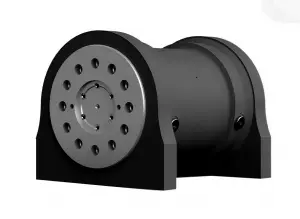
The WBV Series Tiltrotator provides an advanced attachment control solution by adding hydraulic tilt and rotation functions between the excavator arm and working attachment. Through optimized structural design, extended operating range, and reliable hydraulic performance, the WBV Series helps excavators achieve improved attachment utilization, higher positioning accuracy, and more efficient operation in complex job sites.
Improving Excavator Capability Beyond Traditional Attachment Systems
Traditional excavator attachments are designed to perform specific tasks within a limited movement range. Although this structure is suitable for standard excavation operations, it becomes less efficient when projects require frequent angle adjustments, precision finishing, or operation in restricted areas.
In many construction environments, the excavator itself has sufficient power, but the attachment positioning capability becomes the limiting factor.
Typical challenges include:
- Limited attachment working angles;
- Frequent machine repositioning requirements;
- Reduced efficiency in confined areas;
- Difficulty performing precision finishing operations;
- Increased dependence on operator experience.
A hydraulic tiltrotator changes the way attachments interact with the working environment. Instead of relying mainly on machine movement, operators can adjust attachment orientation directly, allowing the excavator to perform tasks with greater flexibility and accuracy.
How Does WBV Series Tiltrotator Improve Attachment Control?
The performance value of a tiltrotator is not simply adding rotation and tilting functions. The key advantage lies in improving the overall relationship between the excavator, attachment, and working environment.
The WBV Series is engineered to optimize attachment movement while maintaining structural stability during continuous operation.
Optimized Structure for Lightweight Attachments and Precision Work
Different excavator applications require different attachment configurations. For compact excavators and precision construction tasks, excessive attachment weight or oversized structures can affect machine balance and operational sensitivity.
The WBV Series adopts an optimized working width structure, allowing better compatibility with lightweight and narrow attachments.
This design provides several practical benefits:
- Improved attachment integration with compact machinery;
- Reduced additional load on the excavator system;
- Better control during detailed excavation;
- Enhanced suitability for narrow-space operations.
For applications such as landscaping, urban construction, and precision earthmoving, optimized dimensions help operators achieve more accurate control without sacrificing equipment stability.
Extended Working Range for Improved Attachment Accessibility
One of the major limitations of conventional attachment systems is restricted access to certain working positions. When the attachment cannot reach the required angle, operators must move the entire excavator, increasing operation steps and reducing productivity.
The WBV Series expands the effective working range of the attachment system, allowing operators to approach tasks from more directions.
This capability helps reduce:
- Unnecessary machine repositioning;
- Idle movement time;
- Difficult positioning operations;
- Restrictions caused by complex terrain.
By increasing attachment accessibility, the excavator can perform more tasks without changing its basic working position.
Enlarged Swivel Angle for Multi-Directional Operation
Complex construction environments often require attachments to operate at various angles. A limited rotation range can create working dead zones and reduce equipment adaptability.
The WBV Series provides an enlarged swivel angle, allowing attachments to achieve broader multi-directional movement.
This improves performance in applications requiring:
- Slope adjustment;
- Precise material handling;
- Irregular terrain operation;
- Complex excavation angles.
The increased movement capability allows each attachment to perform closer to its full functional potential.
Reducing Downtime Through Low-Maintenance Engineering
For professional equipment users, productivity is closely related to machine availability. Frequent maintenance requirements can interrupt operations and increase total ownership costs.
The WBV Series Tiltrotator incorporates a simplified internal structure and optimized lubrication design to reduce routine maintenance demands.
The low-maintenance design helps:
- Extend service intervals;
- Reduce manual maintenance workload;
- Improve equipment availability;
- Support longer continuous operation.
By reducing unnecessary maintenance interruptions, the WBV Series helps construction equipment maintain consistent productivity throughout demanding working schedules.
How Does a Tiltrotator Improve Excavator Operating Economics?
The value of a tiltrotator is not only measured by additional functions but also by how it improves the overall efficiency of equipment utilization.
A conventional excavator may require different machines or frequent attachment adjustments to complete various tasks. By improving attachment flexibility, a tiltrotator allows one excavator to handle a wider range of operations.
This can provide advantages such as:
- Higher equipment utilization rate;
- Reduced requirement for additional machinery;
- Improved project flexibility;
- Lower operating costs over the equipment lifecycle.
For contractors and equipment owners, improving the capability of existing machinery can be an effective way to increase return on investment.
Selecting the Right Tiltrotator for Excavator Applications
Choosing a suitable tiltrotator requires consideration of the complete equipment system rather than only product specifications.
Key factors include:
- Excavator operating weight;
- Attachment type and working load;
- Hydraulic system compatibility;
- Required movement range;
- Operating environment;
- Expected working intensity.
For compact excavators, lightweight structure and precise control may be the priority. For larger machines, structural strength, load capacity, and durability become more important.
A properly matched tiltrotator ensures reliable operation while maximizing the performance advantages of the excavator.
Why WBV Series Tiltrotator Is Designed for Modern Excavators
The WBV Series Tiltrotator is developed to address the increasing demand for flexible and efficient excavator operation.
Its design advantages include:
- Optimized dimensions for different attachment requirements;
- Expanded attachment movement capability;
- Improved working flexibility;
- Reduced maintenance requirements;
- Stable performance for continuous construction operations.
By improving the connection between excavator and attachment, the WBV Series helps transform standard excavators into more versatile working machines.
Conclusion
The development of modern construction equipment is moving toward higher flexibility, precision, and operational efficiency. Traditional attachment systems often limit excavator capability in complex working environments, creating unnecessary repositioning and productivity losses.
The WBV Series Tiltrotator provides a practical solution by improving attachment control, expanding working range, and reducing maintenance requirements.
Through optimized structural design and reliable hydraulic performance, the WBV Series helps excavators achieve better adaptability, higher utilization, and more efficient operation across demanding construction applications.
Frequently Asked Questions
What is the main advantage of a hydraulic tiltrotator?
A hydraulic tiltrotator improves excavator flexibility by allowing attachments to rotate and tilt, reducing machine repositioning and improving working accuracy.
Why is attachment movement important for excavator productivity?
Better attachment movement allows excavators to perform more tasks efficiently, especially in narrow spaces, complex terrain, and precision construction applications.
How does WBV Series Tiltrotator reduce downtime?
The WBV Series uses optimized structural and maintenance design to reduce routine service requirements and support longer continuous operation.
What factors should be considered when selecting a tiltrotator?
Selection should consider excavator size, attachment requirements, hydraulic compatibility, working environment, and expected operating conditions.
Post time: Jul-24-2026