When engineers design a hydraulic rotation system, one common question is: rotary actuator vs motor, which one is better? Both components can create rotary movement, but they are not used in the same way. A hydraulic rotary actuator is usually designed for controlled limited-angle rotation, while a hydraulic motor is generally used for continuous rotation. Choosing the wrong component can lead to poor control, unstable torque, wasted installation space, and higher maintenance costs.
For construction machinery, agricultural equipment, aerial work platforms, material handling machines, and special vehicles, rotational movement is often required for tilting, turning, positioning, steering, folding, clamping, or driving. The best solution depends on whether the machine needs precise angle control or continuous rotary power.
Basic Difference Between a Rotary Actuator and a Motor
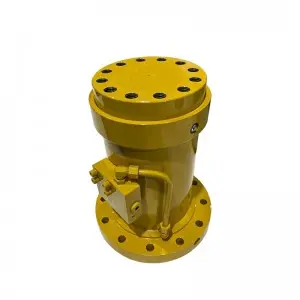
A rotary actuator converts hydraulic pressure into rotary motion within a limited angle range. It is often used when a machine needs to rotate from one position to another and hold that position. Common rotation ranges may include 90 degrees, 180 degrees, 220 degrees, or other designed angles depending on the actuator structure.
A hydraulic motor, however, is designed for continuous rotation. It can keep rotating as long as hydraulic flow is supplied. This makes it suitable for wheels, augers, conveyors, winches, drills, and drive systems.
The core difference is simple:
- A rotary actuator is mainly for controlled angle movement.
- A hydraulic motor is mainly for continuous rotation.
This difference affects almost every selection decision.
When a Rotary Actuator Is the Better Choice
A hydraulic rotary actuator is usually better when the application needs strong torque, compact installation, and accurate position control within a limited angle.
It is commonly used in:
- Excavator tilt attachments
- Aerial work platform positioning systems
- Bucket tilt systems
- Agricultural implement adjustment
- Compact construction machinery
- Forestry attachments
- Industrial positioning systems
- Special vehicle mechanisms
In these applications, the machine does not need continuous spinning. Instead, it needs controlled rotation to a specific angle and stable holding during operation.
Advantages of a Hydraulic Rotary Actuator
A hydraulic rotary actuator offers several important advantages for angle-control systems.
Compact Structure
A rotary actuator can replace a cylinder-linkage mechanism in many designs. This helps reduce external arms, pins, brackets, and connecting rods. For compact machinery or attachments, saving space can be a major advantage.
Direct Torque Output
The actuator delivers torque directly around the rotation axis. This reduces mechanical loss and can improve movement stability.
Better Position Holding
In many limited-angle applications, holding position is just as important as movement. A rotary actuator can help maintain the working angle more reliably when properly matched with the hydraulic system.
Cleaner Equipment Design
Because fewer external linkage parts are required, the equipment structure can become cleaner and easier to protect.
When a Hydraulic Motor Is the Better Choice
A hydraulic motor is the better solution when the machine requires continuous rotation or repeated full-circle movement.
Typical applications include:
- Wheel drive systems
- Conveyor drives
- Drill and auger systems
- Winches
- Rotary brushes
- Fans
- Mixers
- Track drive systems
- Swing drive systems when combined with gearboxes
A hydraulic motor is not mainly designed to stop at a limited angle and hold position. It is designed to keep rotating and transmit power continuously.
Advantages of a Hydraulic Motor
Hydraulic motors have their own clear advantages.
Continuous Rotation
This is the most important advantage. If the application requires unlimited rotation, a rotary actuator is usually not suitable, while a hydraulic motor is the natural choice.
Wide Speed Range
Hydraulic motors can be selected for different speeds and torque outputs. This makes them flexible for driving systems.
Mature Drive Applications
Hydraulic motors are widely used in travel drives, swing drives, winches, conveyors, and industrial machines. They are practical for power transmission tasks.
Easy Integration with Gearboxes
When high torque and lower speed are required, hydraulic motors can be combined with reduction gearboxes to form travel drives, swing drives, or final drive systems.
Rotary Actuator Vs Motor: Selection by Application
Instead of asking which one is better in general, buyers should ask which one is better for the actual machine function.
Choose a rotary actuator when:
- Rotation angle is limited.
- Compact installation is important.
- Precise positioning is required.
- Strong holding ability is needed.
- External linkage should be reduced.
- The mechanism needs to tilt, fold, clamp, or position.
Choose a hydraulic motor when:
- Continuous rotation is required.
- The system needs to drive wheels, tracks, or shafts.
- Speed control is important.
- The system works as a power transmission unit.
- A gearbox can be used to increase torque.
- The application requires repeated full-circle movement.
Torque Requirement Is Not the Only Factor
Many buyers focus only on torque, but torque is not enough to make the right decision. Two components may provide similar torque values, but their working principles are different.
Other important factors include:
- Required rotation angle
- Continuous or limited movement
- Holding position requirement
- Available installation space
- Hydraulic flow and pressure
- Speed requirement
- Load direction
- Duty cycle
- Control accuracy
- Maintenance accessibility
A rotary actuator may be more compact and controlled, while a motor may be more suitable for continuous power output.
How WEITAI Rotary Actuator Solutions Fit Modern Machinery
For machinery that requires compact, limited-angle, high-torque rotation, WEITAI hydraulic rotary actuators are developed to support demanding equipment applications. They are suitable for construction attachments, tilt systems, aerial work platforms, agricultural equipment, and special machinery where direct rotary movement and reliable angle control are important.
The value of a rotary actuator is not only in creating rotation but in helping equipment become more compact, efficient, and easier to control. For OEM machinery, this can support cleaner design and better operating performance.
Conclusion
The choice between rotary actuator vs motor depends on the type of rotation required. A hydraulic rotary actuator is better for limited-angle positioning, tilting, folding, and controlled movement. A hydraulic motor is better for continuous rotation, drive systems, and power transmission.
For engineers and buyers, the right decision should be based on movement type, torque, speed, holding requirement, space, hydraulic compatibility, and working environment. Choosing the correct component can improve system performance, reduce maintenance costs, and make hydraulic equipment more reliable.
FAQ
1、What is the main difference between a rotary actuator and a hydraulic motor?
A rotary actuator provides controlled limited-angle rotation, while a hydraulic motor provides continuous rotary motion.
2、Can a rotary actuator replace a hydraulic motor?
Only in limited-angle applications. If continuous rotation is required, a hydraulic motor is usually the better choice.
3、Is a rotary actuator better for compact machinery?
Yes. A rotary actuator is often better for compact machinery when the system needs strong torque and precise angle control in limited space.
4、When should I choose a hydraulic motor instead of a rotary actuator?
You should choose a hydraulic motor when the system needs continuous rotation, speed control, or power transmission through wheels, tracks, shafts, conveyors, or gearboxes.
Post time: Jun-22-2026