
A Power Tilt Coupler can improve excavator productivity by allowing the operator to change the working angle of the bucket without repeatedly repositioning the entire machine. For trench finishing, grading, slope shaping and work around obstacles, this can change how much useful work is completed from a single excavator position.
Excavator productivity is often discussed in terms of engine power, hydraulic output and digging force, but actual jobsite efficiency also depends on how frequently the machine has to interrupt work and relocate. Every time the excavator stops digging, moves the tracks, stabilizes and approaches the work again, time is spent repositioning rather than completing the task.
A Power Tilt Coupler Changes the Working Geometry
With a conventional fixed bucket connection, the working angle is largely determined by the position of the undercarriage, boom and arm. The excavator can curl and extend the bucket, but it has limited ability to change the bucket’s lateral relationship to the working surface.
A Power Tilt Coupler adds another degree of movement at the attachment connection. Instead of asking the entire excavator to create every required angle, the operator can make part of that adjustment directly at the bucket.
This does not replace boom or arm movement. Instead, it adds flexibility to the existing excavator geometry, allowing the machine to approach slopes, trench walls and uneven surfaces more effectively from the same base position.
Repositioning Is a Hidden Part of Excavator Cycle Time
Machine repositioning often appears insignificant because each individual movement may take only a short time. Across a full working day, however, repeated travel can become a substantial part of the job.
The operator may need to stop the digging cycle, lift the attachment, move the excavator, align it again and re-establish a stable working position. In a confined area, the movement can take even longer because surrounding equipment, structures or trench edges restrict where the machine can travel.
A Power Tilt Coupler cannot eliminate all repositioning, but it can reduce the number of times the machine must move simply to obtain a different bucket angle. The result is that a greater percentage of the operating cycle can be spent performing useful work.
A Wider Tilt Range Increases the Workable Area
Greater tilt movement allows the bucket to follow surfaces that are not directly aligned with the excavator boom.
This is particularly useful in common Hydraulic Tilt Coupler applications such as slope shaping, trench-side cleaning, drainage work and landscaping. A fixed bucket may require the excavator to reposition each time the working surface changes orientation, while a tilting attachment can adjust to the surface more directly.
The practical benefit is therefore not just a larger tilt-angle specification. The real value is the additional working area that can be reached without changing the location of the undercarriage.
This can be especially useful in narrow construction areas where the machine has limited space to reposition.
More Attachment Movement Must Still Support Real Excavation
Flexibility has limited value if the attachment becomes suitable only for light finishing work. Excavators are expected to handle changing tasks, and the same machine may dig, clean a trench, shape a slope and move material during one project.
A tilt system therefore needs to maintain useful digging capability while adding angular freedom. If the operator gains a wide tilt range but loses too much practical excavation performance, the attachment may only be useful for a narrow part of the job.
This is why tilt angle and retained digging capability should be considered together. The right question is not simply “How far can the bucket tilt?” but “How much useful work can it still perform across that range?”

Where Does a Power Tilt Coupler Create the Most Value?
The benefit is usually greatest in jobs where the required working angle changes repeatedly while the excavator remains in roughly the same area:
● Trench-side cleaning and finishing
● Slope shaping and grading
● Drainage-channel construction
● Landscaping and contouring
● Work beside foundations or retaining walls
● Confined jobsites with limited repositioning space
● Final trimming after bulk excavation
In these conditions, moving the bucket instead of the entire machine can reduce interruptions and make the workflow more direct.
Fewer Track Movements Can Reduce More Than Lost Time
Every machine reposition involves the undercarriage, final drives and tracks. Even when travel distance is short, these systems are still being used for a movement that does not directly excavate material.
On sensitive surfaces, unnecessary track movement can also disturb finished ground or create additional site cleanup. Near trench edges and structures, repeated repositioning may require extra operator attention to maintain a stable machine position.
Reducing these movements can therefore affect both efficiency and the way the machine interacts with the jobsite.
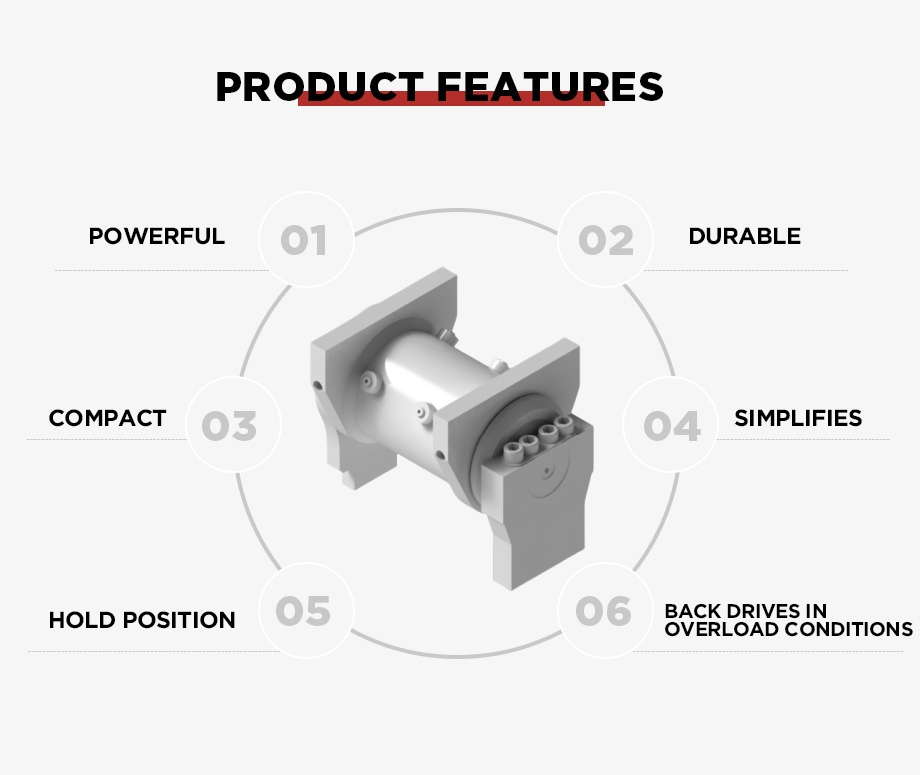
This is why Power Tilt productivity is better understood as an improvement in working coverage rather than simply a faster attachment.
The Operator Can Approach the Same Task Differently
A wider attachment angle can change the sequence in which a job is completed. Instead of repositioning the excavator for every section of a slope, the operator can remain in one position and work across a broader area before moving.
In trench work, the bucket can approach different side angles without requiring the undercarriage to sit at the exact angle of the trench surface. In landscaping, the same flexibility can help follow irregular contours more naturally.
This can reduce the number of machine movements required to finish a section of work and may also simplify the operator’s approach to complex geometry.
The value becomes greater on jobs where finishing accuracy matters as much as bulk excavation volume.
Power Tilt Sits Between a Fixed Coupler and More Complex Systems
Not every excavator application needs full multi-axis attachment control.A fixed coupler remains practical for straightforward excavation where the machine has enough space to reposition. More advanced attachment systems may be justified where very broad rotational freedom is required.
For users comparing Tilt Rotator vs Power Tilt, Power Tilt provides a middle option. It retains a familiar excavator working style while adding significant angular flexibility at the bucket.
For contractors working across excavation, grading and landscaping, this can provide additional functionality without necessarily moving to a more complex attachment system.
For attachment distributors, it also creates a clear solution for users whose main problem is frequent repositioning rather than a need for continuous attachment rotation.
Attachment Flexibility Should Be Evaluated With Lifecycle Cost
An attachment can improve jobsite productivity but still create a poor ownership experience if maintenance and replacement costs are high.
For fleet operators, OEMs and distributors, total cost of ownership includes repair requirements, replacement components, service intervals and downtime. The value of a Power Tilt system therefore depends on what happens over its complete service life, not only on how it performs during a demonstration.
A system that maintains practical serviceability and reasonable replacement cost can produce a stronger long-term economic case than one judged purely by maximum movement range.
This is especially relevant for distributors supporting multiple customers, where after-sales requirements become part of the product decision.
Attachment Security Remains a Core Requirement
Any coupler operates between the excavator and the working attachment, so connection security remains fundamental.
A tilt mechanism introduces additional movement, but that flexibility should not compromise reliable attachment retention. The system must continue to operate under vibration, repeated load changes and the forces generated during excavation.
For OEMs and attachment suppliers, safety features should therefore be considered as part of the total coupler architecture rather than as an optional extra.
Productivity is valuable only when the attachment remains secure and predictable throughout the working cycle.
WEITAI Power Tilt Coupler Performance
The WEITAI Power Tilt Coupler is designed around the combination of greater working flexibility, retained excavation capability, lifecycle economics and attachment security.
Key performance points include:
● 180° tilting capability for wider attachment positioning
● 85%+ digging power retention for demanding excavation tasks
● 60%+ lower replacement and MRO costs to support lifecycle savings
● Dual safety protection for additional attachment security
The 180° tilting capability helps operators approach more working angles without repeatedly changing the excavator’s base position. At the same time, the focus on retained digging power is intended to keep the attachment useful for more than light finishing work.
The lifecycle and safety features address a different part of the equipment decision: how the attachment performs after purchase and how confidently it can be integrated into regular work.
For projects across different excavator classes, the Hydraulic Power Tilt for Excavators — WPT Series provides multiple configurations for application matching.
Matching Power Tilt to the Excavator
Excavator tonnage is an important starting point, but it is not enough to confirm a Power Tilt application.
The attachment type, mounting interface, available hydraulic pressure and flow, expected digging load and typical working environment should also be considered. A machine used mainly for trench finishing may require a different performance balance from one that regularly performs heavier excavation.
For replacement projects, original coupler dimensions and machine connection details become especially important. Similar excavator weight classes do not automatically guarantee the same interface.
For OEM projects, integration can also involve hydraulic routing and attachment geometry, so early matching usually produces a cleaner solution.
From Excavator Information to Configuration and Quotation
A useful Power Tilt enquiry should provide enough information to understand both the machine and the intended work. Excavator model, operating weight, attachment type, mounting dimensions and hydraulic conditions are useful starting points.
The application should also be identified. Grading, trench work, landscaping and general excavation place different demands on the attachment, even when the excavator size is the same.With this information, WEITAI can evaluate whether an existing Power Tilt configuration is suitable or whether another matching direction should be considered.
Conclusion
A Power Tilt Coupler does more than change the bucket angle. Its real value is allowing the excavator to complete more useful work from the same machine position.
By reducing unnecessary repositioning, the attachment can improve workflow during grading, trench finishing, slope shaping and other jobs where working angles change frequently. At the same time, tilt flexibility needs to be balanced with usable digging capability, lifecycle cost and attachment security.
For OEMs, distributors and contractors, the useful question is therefore not simply how far the bucket can tilt. It is how much more work the excavator can complete before it needs to move again.
FAQ
What is the main advantage of a Power Tilt Coupler?
The main advantage is greater bucket-angle flexibility without repeatedly repositioning the excavator. This is particularly useful for grading, trench finishing, slope shaping and confined-area work.
Does a Power Tilt Coupler reduce digging power?
Adding a tilt mechanism changes how forces are transferred through the attachment. The WEITAI Power Tilt solution is designed to retain 85%+ digging power while providing additional tilt flexibility.
How much does a WEITAI Power Tilt Coupler cost?
Power Tilt Coupler price depends on excavator size, mounting interface, hydraulic requirements, configuration and order quantity. Providing the excavator model, operating weight and attachment requirements allows WEITAI to evaluate the configuration and prepare a quotation.
Can WEITAI Power Tilt be used for OEM or replacement projects?
Yes. OEM-compatible and replacement applications can be evaluated according to excavator model, mounting dimensions, hydraulic conditions and actual working requirements.
Post time: Nov-12-2026