
A power tilt coupler is more than another attachment between the excavator and the bucket.
For excavator manufacturers and attachment builders, the real question is not simply “Can it tilt?”
It is: How much machine repositioning can it eliminate? How much digging performance does it retain? How safely does it hold the attachment? And how easily can it be integrated into an existing excavator or attachment design?
These questions matter because a tilt solution affects more than the attachment itself. It can influence machine productivity, operator efficiency, maintenance requirements, and the overall value of the excavator.
Before choosing a power tilt coupler, here are seven things manufacturers should consider.
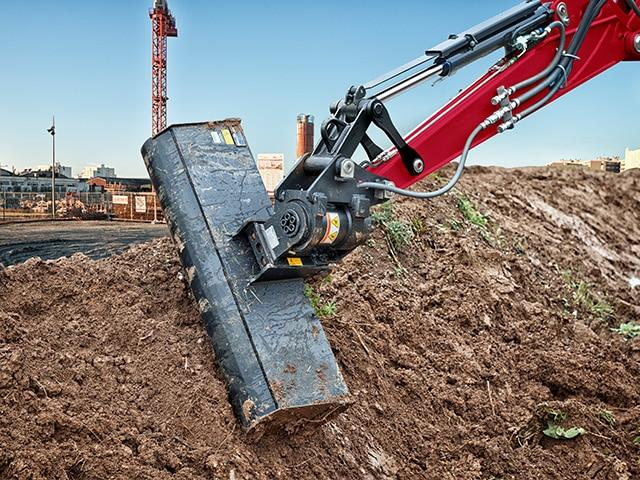
1. Don’t Just Ask How Far It Tilts — Ask How Much Repositioning It Eliminates
This is where the real productivity difference begins.
With a traditional fixed coupler, the bucket angle is largely determined by the position of the excavator boom, arm, and machine itself.
When working on slopes, trenches, drainage channels, landscaping projects, or other applications requiring precise bucket positioning, the operator may need to repeatedly reposition the excavator to achieve the desired working angle.
That means more machine movements for the same job.
A hydraulic power tilt coupler changes the equation.
Instead of relying entirely on machine repositioning, the operator can adjust the attachment angle directly from the cab.
More angle adjustment. Less unnecessary repositioning.

For OEMs, this is an important point to evaluate:
Don’t measure a power tilt only by its tilt angle. Measure it by the work it can help the operator complete without moving the machine.
2. In-Cab Adjustment Matters More Than It Looks
A power tilt coupler is most useful when the operator can control the attachment angle without leaving the cab.
For applications such as:
- Slope trimming
- Grading
- Drainage work
- Landscaping
- Road construction
- Ditch cleaning
- Precision excavation
The required bucket angle can change continuously during operation.
A hydraulic power tilt solution allows the operator to make these adjustments from the excavator cab, rather than relying on repeated machine movements or manual adjustment.
This can make the machine easier to operate in applications where positioning accuracy matters as much as digging power.
For excavator manufacturers, this also creates a stronger product proposition:
The excavator does more without requiring the operator to move the entire machine every time the attachment angle changes.
3. Don’t Trade Productivity for Digging Force
One common concern when adding a tilt mechanism is whether the additional mechanism compromises digging performance.
This is particularly important for excavator OEMs.
A tilt solution should not simply provide more movement. It should also be designed to maintain the excavator’s ability to deliver useful digging force at the attachment.
This is where the architecture of the actuator becomes important.
A helical rotary actuator design can integrate the drive mechanism into a compact hydraulic actuator, avoiding the need for a conventional motor, reducer, and slewing bearing arrangement. Utilizing an advanced engineered WPT Power Tilt solution ensures high torque output without adding excessive weight to the arm tip.
For manufacturers, the question should therefore be:
What happens to digging performance when the attachment is working under load?
A well-designed power tilt solution should balance:
- Tilt range
- Structural strength
- Compact installation
- Hydraulic performance
- Load capacity
- Digging force
The goal isn’t simply to make the attachment move. The goal is to make it move without turning the excavator into a weaker machine.
4. Safety Should Be Designed Into the Coupler — Not Added Later
For an OEM, attachment retention is a critical consideration.
A power tilt coupler operates under changing loads and working angles. The attachment must remain securely connected during operation.
That’s why manufacturers should look beyond the basic question of whether the coupler has a hydraulic locking function.
Consider the complete attachment-retention system.
For example, a dual-safety locking concept can combine:
Active Hydraulic Locking
The hydraulic system keeps the attachment securely engaged during normal operation.
Passive Mechanical Anti-Drop Protection
A mechanical safety mechanism provides an additional layer of attachment retention if hydraulic pressure is lost.
This type of design addresses a simple but important OEM requirement:
What happens if hydraulic pressure disappears?
A power tilt coupler should be evaluated not only when everything is working normally, but also under abnormal conditions.
5. Compatibility Can Save More Than Engineering Time
For excavator and attachment manufacturers, introducing a new hydraulic attachment solution shouldn’t mean redesigning the entire attachment.
Mounting dimensions, hydraulic connections, installation space, weight distribution, and interface standards all need to be considered.
This is particularly important when a manufacturer already produces attachments based on an established mounting interface.
A power tilt coupler designed around HELAC-standard mounting interfaces can provide a more straightforward alternative for applications using that interface.
For OEMs and attachment builders, compatibility can reduce unnecessary engineering changes and make product integration easier.
Before selecting a power tilt supplier, ask:
- Does it match our existing mounting interface?
- Will the attachment layout need to change?
- Are hydraulic connections compatible?
- Does installation require major structural modifications?
- Can the solution fit into our existing product platform?
The best solution isn’t always the one with the most features. Sometimes, it’s the one that fits your existing product with the least disruption.
6. Look at Maintenance Cost — Not Just Purchase Price
The initial price of a power tilt coupler is only one part of the equation.
For rental fleets, contractors, dealers, and attachment manufacturers, long-term maintenance can have a much larger impact on operating cost.
A conventional system may involve multiple components such as:
- Hydraulic motors
- Gear reducers
- Slewing bearings
- Seals
- Other transmission components
An integrated hydraulic rotary actuator can simplify the drive architecture by combining the hydraulic drive and rotary mechanism into a compact unit.
That can potentially reduce the number of components that require maintenance.
For manufacturers evaluating different power tilt solutions, the better question is therefore not:
“Which one costs less to buy?”
It’s:
“Which solution costs less to own and maintain over its working life?”
This is the difference between comparing purchase price and comparing total cost of ownership.
7. Choose a Power Tilt That Makes Your Excavator Easier to Sell
The final question is perhaps the most important for an excavator manufacturer.
A new attachment solution should give the machine a reason to stand out.
“Hydraulic tilt” by itself may not be enough.
The stronger sales proposition is what that capability allows the operator to do: More work from the same machine position.
For example, an excavator equipped with a power tilt coupler can offer greater flexibility for applications involving:
- Precision grading
- Slope work
- Landscaping
- Drainage
- Ditching
- Construction
- Demolition
- General excavation
Instead of positioning the product as simply another hydraulic attachment, OEMs can position it around operator productivity and machine versatility.
That’s a much stronger value proposition.
The Real Cost of a Fixed Coupler Isn’t Always on the Invoice
This is something manufacturers should think about when comparing a traditional fixed coupler with a power tilt solution.
The cost of a fixed coupler isn’t limited to the price of the coupler itself. There can also be a hidden “repositioning tax.”
Every time the operator needs to move the excavator simply to change the working angle, the machine is spending time, fuel, and operating hours on repositioning rather than productive work.
A power tilt coupler changes that workflow:
| Feature | Traditional Fixed Coupler | Hydraulic Power Tilt Coupler |
|---|---|---|
| Workflow | Adjust bucket angle → reposition machine → adjust again → continue working | Adjust bucket angle directly from the cab → continue working |
| Efficiency | High frequency of unnecessary positioning | Maximize time spent on actual digging |
The difference becomes particularly meaningful when the job requires frequent angle changes.
That’s why excavator manufacturers shouldn’t evaluate a power tilt coupler as simply a “tilting attachment.” They should evaluate it as a productivity solution.
Checklist: What Should Excavator Manufacturers Ask Before Choosing a Power Tilt?
Before selecting a supplier, put these seven questions on the table:
| What to Evaluate | Why It Matters |
|---|---|
| Repositioning | How much unnecessary machine movement can it eliminate? |
| In-cab control | Can the operator adjust the angle without leaving the cab? |
| Digging force | Does the system maintain useful digging performance? |
| Safety | What happens if hydraulic pressure is lost? |
| Compatibility | Can it integrate with existing attachment interfaces? |
| Maintenance | How many components require long-term servicing? |
| Product value | Does it give the excavator a stronger market proposition? |
The right power tilt isn’t necessarily the one with the longest specification sheet. It’s the one that delivers the right combination of productivity, performance, safety, compatibility, and lifecycle value.
Stop Paying the “Repositioning Tax”
For excavator manufacturers, the next generation of attachment solutions isn’t only about adding another function to the machine. It’s about helping the operator do more with the machine already in front of them.
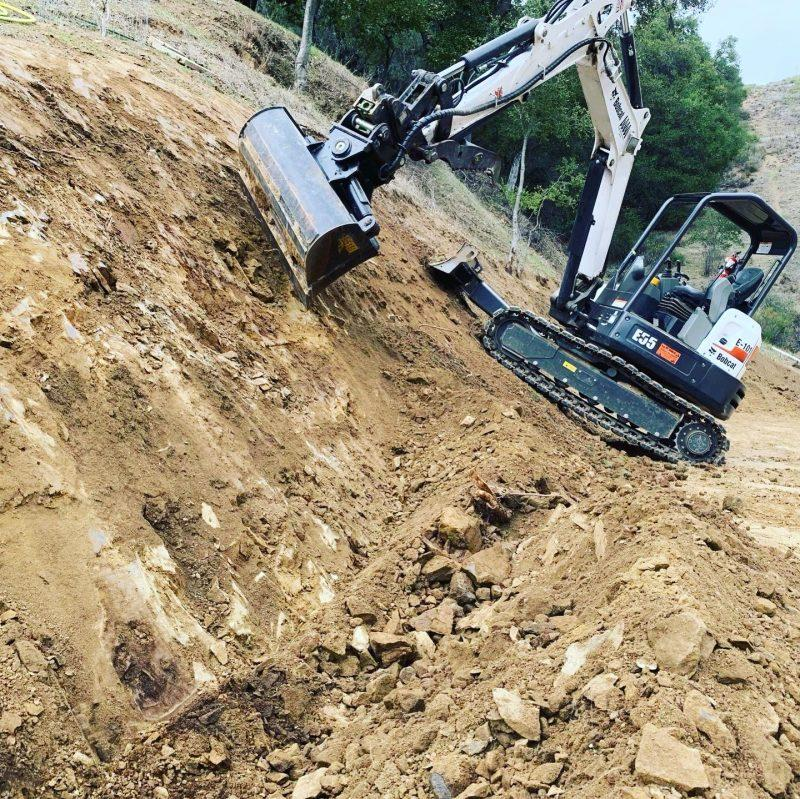
A hydraulic power tilt coupler can turn attachment angle adjustment from a machine-positioning problem into an in-cab control function.
- Less repositioning.
- More working flexibility.
- Better attachment utilization.
And for OEMs, that’s ultimately the question worth asking:
Are you selling a coupler — or are you giving the excavator a better way to work?
Post time: Sep-02-2026