
In modern industrial machinery and mobile equipment, reliable rotary movement is often a critical requirement. Many machines need to rotate heavy loads, maintain accurate positioning, and operate continuously under demanding working conditions. However, designing a rotary system that provides high torque, stable control, and long service life is not always simple.
Traditional mechanical rotation solutions usually rely on multiple components, such as gears, shafts, and transmission systems. Although these structures can achieve rotary movement, they often require more installation space, more maintenance, and additional mechanical design considerations.
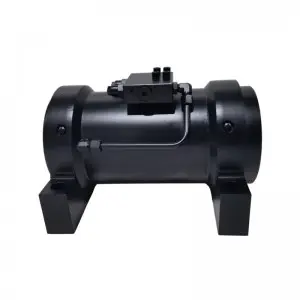
A Hydraulic Rotary Actuator provides an integrated solution by converting hydraulic energy into controlled rotary movement. With high torque output, compact structure, and reliable performance, it helps equipment achieve efficient rotation while simplifying the overall mechanical system.
However, choosing the right hydraulic rotary actuator requires more than selecting a model with sufficient torque. The actual application conditions, including load characteristics, mounting design, operating frequency, and working environment, all influence the final performance and service life of the actuator.
Understanding the Working Principle of a Hydraulic Rotary Actuator
A hydraulic rotary actuator is a hydraulic component designed to convert fluid pressure into rotary motion. Unlike traditional motors that continuously rotate, rotary actuators are commonly used when equipment requires controlled angular movement, accurate positioning, and high torque output within a limited rotation range.
During operation, hydraulic fluid enters the actuator and creates internal pressure that drives the rotary mechanism. The generated force is transferred through the shaft to move the connected load. By controlling hydraulic flow and pressure, the system can achieve stable rotation, controlled speed, and accurate positioning.
Because the actuator combines power transmission and rotary movement into one compact structure, it reduces the need for complex mechanical transmission systems. This makes hydraulic rotary actuators particularly valuable in equipment where installation space, load capacity, and reliability are all important factors.
Why Hydraulic Rotary Actuators Are Widely Used in Heavy-Duty Equipment
Many industrial and mobile equipment manufacturers face the same challenge: achieving powerful rotary movement without increasing system complexity.
A hydraulic rotary actuator helps solve this challenge by providing several advantages compared with traditional rotary mechanisms.
High Torque Output for Demanding Applications
One of the key advantages of hydraulic rotary actuators is their ability to generate high torque from a compact structure. Hydraulic systems can operate under high pressure, allowing the actuator to handle heavy loads while maintaining a relatively small installation size.
This is especially important for equipment where strong rotational force is required but available space is limited. Instead of using multiple mechanical transmission components, a hydraulic rotary actuator can provide direct and efficient torque transfer.
Compact Structure and Flexible Installation
Space limitations are common in mobile equipment and industrial machinery. A complex mechanical rotation system may require additional gears, shafts, and supporting structures, increasing the difficulty of equipment design.
Hydraulic rotary actuators integrate the driving and rotating functions into one component, allowing engineers to simplify system layouts and improve installation flexibility.
Stable Performance Under Harsh Conditions
Many rotary actuator applications operate in challenging environments, including construction sites, outdoor equipment, mining areas, and industrial facilities.
These conditions may involve:
- Dust and contamination
- Vibration and impact
- Frequent working cycles
- Changing loads
- Moisture and corrosion risks
A properly designed hydraulic rotary actuator with reliable sealing, durable materials, and accurate manufacturing can maintain stable performance in these demanding applications.
How to Select the Right Hydraulic Rotary Actuator for Your Equipment
Selecting a hydraulic rotary actuator should begin with understanding the actual working requirements of the equipment. Choosing only based on maximum torque may result in an unsuitable solution because the actuator must also handle external forces and operating conditions.
The main selection factors include:
- Required torque and load characteristics
- Rotation angle and movement requirements
- Hydraulic system pressure and flow
- Working frequency and duty cycle
- Installation space and mounting structure
- Environmental conditions and protection requirements
Torque and Load Requirements
Torque is one of the most important specifications when selecting a hydraulic rotary actuator. However, the required torque is not determined only by the weight of the load.
The position of the load also affects actuator performance. When the load is located farther away from the actuator shaft, it creates additional bending forces that can increase stress on the shaft and internal components.
Therefore, engineers need to consider both the rotational force requirement and the mechanical load condition to ensure the actuator operates reliably.
Rotation Angle and Operating Requirements
Different equipment requires different rotary movement characteristics. Some applications need limited-angle rotation, such as 90° or 180°, while others may require customized rotation ranges.
The actuator design should match:
- Required rotation angle
- Movement speed
- Positioning accuracy
- Operating sequence
A suitable configuration helps the equipment achieve smooth and repeatable movement.
How Mounting Design Influences Hydraulic Rotary Actuator Reliability
The mounting method is another important factor affecting hydraulic rotary actuator performance. When the connected load creates additional bending forces, the way the load is supported directly affects shaft stress, bearing load, and long-term durability.
Two common mounting configurations are Cantilever Mount and Straddle Mount.
Cantilever Mount
A Cantilever Mount connects the load directly to the shaft flange, with the load supported from only one side of the shaft.
This design provides a compact and simple structure, making it suitable for applications where installation space is limited and the external load is relatively controlled.
Cantilever mounting is commonly considered when:
- The load is close to the actuator shaft
- Side loading is limited
- The mechanical structure needs to remain compact
However, because the load is supported from one side, the actuator shaft must handle the bending moment created by the offset load. For applications involving heavy loads, large offset distances, or safety-related requirements, additional support may be necessary.
Straddle Mount
A Straddle Mount supports the load at both ends of the shaft, creating a more balanced support structure.
Compared with cantilever mounting, this design reduces bending stress and improves load stability. It is often selected for applications requiring higher durability, frequent operation, and more accurate positioning.
Straddle mounting is especially suitable when the equipment needs stronger support against external forces and long-term reliability under demanding conditions.
How Hydraulic Rotary Actuators Solve Common Equipment Challenges
A properly selected hydraulic rotary actuator can help solve several common challenges in equipment design.
Improving Rotary Control and Positioning Accuracy
Many machines require more than simple rotation. They need controlled movement and accurate positioning to improve operational efficiency.
Hydraulic rotary actuators provide stable angular movement, helping equipment achieve repeatable positioning in applications such as boom adjustment, steering systems, and industrial positioning mechanisms.
Reducing Mechanical Complexity
Traditional rotary systems may require multiple transmission components, increasing installation difficulty and maintenance requirements.
By integrating hydraulic power and rotary movement into one compact unit, hydraulic rotary actuators can simplify equipment design and reduce the number of mechanical components.
Supporting Continuous Operation
For equipment operating under frequent cycles, component durability is essential. A suitable hydraulic rotary actuator helps reduce unnecessary stress on the system and maintain consistent performance over long working periods.
Applications of Hydraulic Rotary Actuators
Hydraulic rotary actuators are widely used in equipment requiring controlled rotary movement and positioning.
Common applications include construction machinery, steering systems, boom positioning equipment, drilling systems, platforms, conveyors, and industrial attachments.
Although these applications all require rotation, the actuator design may vary depending on load conditions, operating frequency, and environmental requirements. A compact positioning system may focus on installation flexibility, while heavy-duty equipment may require stronger load support and higher durability.
Conclusion
A Hydraulic Rotary Actuator provides an efficient solution for equipment requiring high torque, compact installation, and reliable rotary control.
Its performance depends on more than torque output and rotation angle. Load characteristics, mounting design, hydraulic conditions, operating cycles, and working environment all influence the final reliability of the system.
Cantilever Mount provides a compact solution for controlled loads where single-side support is acceptable, while Straddle Mount offers improved stability for applications requiring stronger load support.
By selecting the right hydraulic rotary actuator based on actual application requirements, engineers can improve equipment performance, reduce unnecessary wear, and extend the service life of the complete system.
Frequently Asked Questions
What is a Hydraulic Rotary Actuator used for?
A hydraulic rotary actuator converts hydraulic pressure into controlled rotary movement and is widely used for positioning, steering, attachment rotation, and heavy-duty mechanical applications.
What are the advantages of hydraulic rotary actuators?
Hydraulic rotary actuators provide high torque output, compact structure, reliable operation, and accurate rotary positioning, making them suitable for demanding industrial and mobile equipment.
What is the difference between Cantilever Mount and Straddle Mount?
Cantilever Mount supports the load from one side of the shaft and provides a compact design, while Straddle Mount supports the load from both ends to improve stability and reduce bending stress.
How should I choose the right hydraulic rotary actuator?
Selection should consider torque requirements, load conditions, rotation angle, hydraulic pressure, working frequency, mounting design, and environmental conditions.
Post time: Jul-22-2026