
A hydraulic valve actuator converts hydraulic pressure into controlled rotary movement, allowing a valve to open, close, or remain at a required position without direct manual operation. In marine, offshore, water treatment, chemical processing, and heavy industrial systems, hydraulic actuation is commonly used where valves must deliver strong torque, dependable response, and stable operation under difficult environmental conditions.
Many of these systems rely on quarter-turn valves that move through approximately 90 degrees. Although the required movement is relatively short, the actuator may need to overcome high valve resistance, repeated operating cycles, corrosion, pressure changes, and limited installation space.
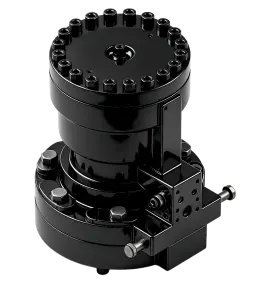
The WEITAI WBRC Series is a double-acting balanced rotary hydraulic valve actuator developed for 90-degree valve control. Its compact rotary-vane structure is designed for marine, offshore, and industrial environments, including applications exposed to sea air or submerged operating conditions.
Remote Valve Control in Marine Systems
Large vessels contain many valves distributed across ballast tanks, cargo systems, machinery spaces, bilge pipelines, and other areas. Some valves may be difficult or unsafe to reach during operation.
A hydraulic valve actuator allows these valves to be controlled from a remote operating station. The operator can open or close the valve without entering a confined, wet, hot, or potentially hazardous area.
Typical marine applications include:
- Ballast water control
- Bilge system operation
- Cargo oil handling
- Fuel and lubrication pipelines
- Cooling-water circuits
- Firefighting systems
- Tank filling and discharge lines
In a valve remote control system, dependable actuator movement is essential. A valve that does not reach its intended position can interrupt fluid transfer, affect tank management, or prevent the system from isolating a pipeline when required.
For this reason, marine actuators must provide sufficient torque throughout the complete movement rather than only at the beginning of rotation.
Why Balanced Rotary Movement Matters
A valve actuator transfers torque directly to the valve spindle. If the internal actuator forces are not properly balanced, additional side loads or bending forces may be transferred to the spindle and valve structure.
Over time, these unwanted forces may contribute to uneven wear around the valve stem, seat, seals, and mounting connection.
The WBRC Series uses a balanced rotary-vane principle. Its opposed internal vane arrangement is designed to balance hydraulic forces and reduce side loading on the valve spindle. This supports more direct torque transmission during valve opening and closing.
Balanced movement is particularly useful in applications where:
- The valve operates frequently
- Reliable sealing must be maintained
- The valve spindle is sensitive to uneven loading
- Installation space limits the use of larger external linkages
- Long-term maintenance access is difficult
The design also removes the need for a long linear cylinder and external crank mechanism, helping create a more compact valve-control assembly.
Ballast and Bilge Control on Ships
Ballast systems control vessel stability, draft, and trim by transferring water between tanks. These systems may include many valves installed in different sections of the vessel.
A hydraulic valve actuator allows ballast valves to be controlled from a centralized system. During loading, unloading, or changes in sailing conditions, operators can manage water movement without visiting each valve location.
Bilge systems present similar requirements. Valves may need to direct water toward pumps, isolate sections of piping, or prevent reverse flow. Reliable actuation is important because these systems may need to operate under urgent conditions.
In both applications, the actuator may face moisture, salt, vibration, and long periods without operation. The actuator must still respond correctly when hydraulic pressure is applied.
Corrosion-resistant materials and external coatings therefore play a major role in long-term reliability. The WBRC Series uses a ductile iron housing and stainless steel drive shaft, with coating options available for different marine exposure conditions.
Cargo and Industrial Fluid Handling
Hydraulic valve actuators are also used in cargo transfer and industrial fluid-control systems. These applications may involve oil, water, chemicals, or other process fluids moving through large-diameter pipelines.
During loading or discharge, valves must often operate in a defined sequence. Incorrect valve movement can interrupt the process, create pressure imbalance, or send fluid into the wrong pipeline.
The actuator must provide:
- Predictable opening and closing
- Sufficient torque under pressure
- Stable end positioning
- Resistance to repeated operation
- Compatibility with the surrounding control system
Double-acting hydraulic operation provides powered movement in both directions. Hydraulic pressure actively opens and closes the valve rather than depending on gravity or an external return spring.
This makes the actuator suitable for valves that require positive control in both directions or operate in positions where gravity cannot assist the return movement.
Use in Water Treatment and Process Plants
Hydraulic valve actuators are not limited to shipboard systems. They can also be used in water treatment facilities, chemical plants, energy systems, and heavy industrial fluid networks.
In water treatment facilities, actuators may control isolation valves, filter lines, tank connections, or high-flow pipelines. Industrial plants may use them to direct process liquids, isolate equipment, or control sections of a production system.
Hydraulic actuation is especially useful where high torque is required but installation space is limited. A compact rotary actuator can be mounted directly on the valve, reducing the need for long external linkages.
However, the actuator must be selected according to more than valve size. The actual torque requirement can be affected by:
- Valve type
- Pipeline pressure
- Fluid condition
- Seal friction
- Operating temperature
- Time between operating cycles
- Deposits or corrosion inside the valve
- Required safety margin
A valve that has remained stationary for a long period may require more initial torque than one operating regularly. Selection should therefore consider both normal running torque and the force needed to start movement.
Control Block and Emergency Operation Options
A hydraulic valve actuator often works as part of a larger control system rather than as an independent component. Directional valves, crossover protection, hydraulic bypass functions, position indicators, and emergency operating connections may all be required.
The WBRC actuator supports direct integration with CETOP 3 and ISO 4401 control-block interfaces. Depending on the project, the assembly can include crossover valves, bypass indication, flushing arrangements, mechanical locking options, or connections for an emergency hand pump.
Emergency manual or hydraulic operation is particularly important in marine systems. If the primary hydraulic power unit or electrical control system becomes unavailable, operators may still need a method to move critical valves.
The required emergency arrangement should be determined during the system-design stage rather than added after installation.
Matching Seals and Coatings to the Environment
A standard actuator configuration may not be suitable for every temperature, fluid, or atmosphere.
Seal materials must remain flexible enough to prevent leakage while resisting the hydraulic fluid and surrounding temperature. According to the WEITAI product information, standard NBR seals can be configured for normal operating conditions, while FKM sealing options are available for higher temperatures or more demanding fluid environments.
External coatings should also match the installation location. An actuator installed inside a protected machinery space does not experience the same exposure as one mounted on an open deck or near seawater.
Selecting suitable seals and surface protection at the beginning can reduce premature corrosion, leakage, and unplanned replacement.
WEITAI WBRC Hydraulic Valve Actuator Solutions
The WEITAI WBRC Series covers compact and heavy-duty torque requirements, with models ranging from WBRC 125 to larger units intended for higher-torque valve applications. Detailed dimensional drawings and torque information can be matched according to the valve and project requirements.
Conclusion
A hydraulic valve actuator provides compact and powerful quarter-turn movement for valves used in marine, offshore, water treatment, chemical processing, and industrial fluid-control systems.
Reliable performance depends on correct torque selection, balanced force transmission, environmental protection, compatible mounting dimensions, and proper integration with the hydraulic control system.
For new valve remote control systems or replacement projects, the WEITAI WBRC Series offers a balanced double-acting design, compact installation, configurable materials, and compatibility with existing actuator interfaces. Careful comparison of torque, flange dimensions, shaft connection, hydraulic ports, and operating conditions is essential before final selection.
Frequently Asked Questions
What is a hydraulic valve actuator used for?
It converts hydraulic pressure into rotary movement to open, close, or position a valve. It is commonly used in marine valve remote control systems and industrial fluid pipelines.
Why are hydraulic actuators suitable for large valves?
Hydraulic systems can generate high torque from a relatively compact actuator, making them suitable for valves that require strong opening and closing force.
Can the WBRC Series replace an existing BRC actuator?
The WBRC Series is designed as a compatible replacement for a range of Damcos BRC actuator sizes, but the mounting flange, shaft, ports, torque, and installation dimensions should be verified before replacement.
What information is needed to select a hydraulic valve actuator?
Important information includes valve type, required torque, valve shaft size, mounting dimensions, operating pressure, rotation angle, hydraulic interface, environmental conditions, and required control accessories.
Post time: Jul-28-2026