
Rotary movement is an essential function in many industrial and mobile machines, but designing a reliable rotary mechanism is often more challenging than simply generating movement. Equipment manufacturers need rotary components that can deliver sufficient torque, maintain accurate positioning, fit into limited installation spaces, and continue operating under harsh working conditions.
The Helical Hydraulic Rotary Actuator L20 Series is designed to address these challenges by combining compact hydraulic design with powerful rotary output. Instead of using traditional mechanical rotation systems that require multiple components and additional transmission structures, hydraulic rotary actuators provide direct torque conversion within a single integrated unit.
For OEM equipment manufacturers, this type of rotary solution offers more flexibility during machine design. It helps simplify hydraulic systems, reduce installation complexity, and improve overall equipment reliability.
Why Rotary Mechanism Design Is Challenging for Equipment Manufacturers
Many machines require controlled rotary movement, including construction equipment, agricultural machinery, material handling systems, industrial automation equipment, and specialized vehicles. However, achieving stable rotary performance requires careful consideration of several engineering factors.
One major challenge is the balance between torque output and installation space. Traditional rotary systems often rely on motors, gear reducers, shafts, bearings, and additional mechanical transmission components. Although these systems can provide rotation, they usually require more space and involve more components that may increase maintenance requirements.
Another challenge is maintaining reliable operation under changing loads. Industrial equipment frequently experiences impact forces, vibration, uneven loads, and repeated operating cycles. A rotary mechanism must not only generate movement but also maintain durability and precise control throughout its service life.
For OEM designers, the ideal rotary component should provide:
- High torque output in a compact structure
- Smooth and controlled rotation
- Simple hydraulic connection
- Easy integration into existing equipment
- Long service life under demanding conditions
This is where hydraulic rotary actuator technology provides a practical alternative.
How Helical Hydraulic Rotary Actuator Technology Improves Equipment Performance
The Helical Hydraulic Rotary Actuator L20 Series uses hydraulic pressure to create rotary movement through an internal helical mechanism. Compared with conventional rotary solutions, the helical design allows the actuator to convert linear hydraulic force into powerful rotary torque within a compact housing.
This design brings several advantages for equipment manufacturers.
First, the actuator provides high torque density. The compact structure allows machines to achieve strong rotary performance without requiring large external transmission systems. This is especially valuable for equipment where installation space is limited.
Second, the helical structure supports smooth and controlled movement. In applications where accurate positioning and stable operation are important, controlled rotation helps improve equipment performance and operator experience.
Third, the integrated design reduces the number of mechanical components required. Fewer external parts mean fewer potential failure points, simplified assembly, and easier maintenance.
For mobile equipment manufacturers, reducing system complexity is an important factor because machines often operate in outdoor environments where reliability is critical.
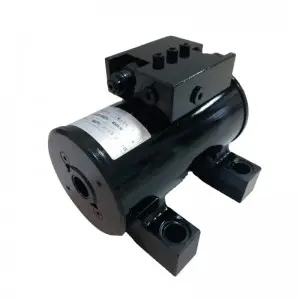
Compact Hydraulic Rotary Solutions for OEM Equipment Integration
OEM customers usually have different machine structures, operating requirements, and installation limitations. A standard rotary component may not always perfectly match every application.
A compact hydraulic rotary actuator provides greater design flexibility because it can be integrated into various equipment systems without requiring large modifications.
Typical applications include:
- Excavator attachments requiring controlled rotation
- Hydraulic tilt systems
- Construction machinery components
- Material handling equipment
- Agricultural machinery
- Industrial positioning systems
- Special vehicles requiring rotary movement
During equipment development, engineers need to consider several factors before selecting a suitable rotary actuator.
Important selection considerations include:
Required Torque and Load Conditions
The actuator must provide enough torque to handle the actual working load. Different equipment applications may require different torque levels depending on working angles, load weight, and operating frequency.
Rotation Angle Requirements
Different machines may require different rotation ranges. Understanding whether the application needs limited-angle rotation or repeated positioning movement helps determine the appropriate actuator configuration.
Installation Space
Compact dimensions are often a key reason why OEM customers choose hydraulic rotary actuators. The actuator size, mounting method, and hydraulic connection position should match the available machine space.
Operating Environment
Outdoor machinery may face dust, moisture, vibration, and temperature changes. Selecting a reliable rotary actuator design helps ensure stable operation in demanding environments.
Supporting OEM Development With Reliable Hydraulic Rotary Technology
For global equipment manufacturers, choosing the right hydraulic component supplier is not only about purchasing a product. It is also about finding a partner who understands equipment integration requirements.
WEITAI Hydraulic focuses on hydraulic rotary actuator solutions for OEM applications, providing products designed for mobile machinery and industrial equipment. The company’s hydraulic rotary actuator range supports applications requiring compact structures, high torque output, and reliable performance.
Through professional hydraulic manufacturing capabilities, engineering support, and customization options, WEITAI helps customers develop rotary systems that match their equipment requirements.
OEM customers can work with hydraulic experts to evaluate factors such as torque requirements, mounting dimensions, working conditions, and system compatibility before finalizing the right rotary actuator solution.
A properly selected hydraulic rotary actuator can improve machine efficiency, reduce design complexity, and provide long-term operating reliability.
Choosing the Right Helical Hydraulic Rotary Actuator for Your Equipment
The Helical Hydraulic Rotary Actuator L20 Series is not simply a replacement for traditional rotary mechanisms. It represents a more integrated approach to modern equipment design.
For machines that require powerful rotation within limited space, hydraulic rotary actuators provide an efficient solution by combining torque generation, compact structure, and hydraulic system compatibility.
When selecting a rotary actuator, OEM manufacturers should focus on actual application requirements rather than only product specifications. Understanding load conditions, installation limitations, rotation requirements, and operating environment will help achieve better equipment performance.
With the right hydraulic rotary solution, equipment manufacturers can create machines that are more compact, reliable, and competitive in global markets.
FAQ
1. What is Helical Hydraulic Rotary Actuator L20 Series used for?
Helical Hydraulic Rotary Actuator L20 Series is used for equipment requiring controlled rotary movement, including construction machinery, mobile equipment, hydraulic tilt systems and industrial applications.
2. What are the advantages of a hydraulic rotary actuator?
A hydraulic rotary actuator provides high torque output, compact structure, simple integration and reliable performance compared with many traditional mechanical rotary systems.
3. How should OEM customers select a rotary actuator?
OEM customers should consider torque requirements, rotation angle, installation space, operating environment and hydraulic system compatibility.
4. Can Helical Hydraulic Rotary Actuator L20 Series be customized?
Yes. OEM customers can discuss application requirements such as mounting dimensions, performance requirements and equipment integration needs for suitable solutions.
Post time: Jul-09-2026