
There is no single “best” hydraulic power tilt coupler for every excavator.
A compact excavator used for landscaping does not place the same demands on a tilt coupler as a larger machine working in demolition or heavy earthmoving. For excavator manufacturers and attachment suppliers, the better question is:
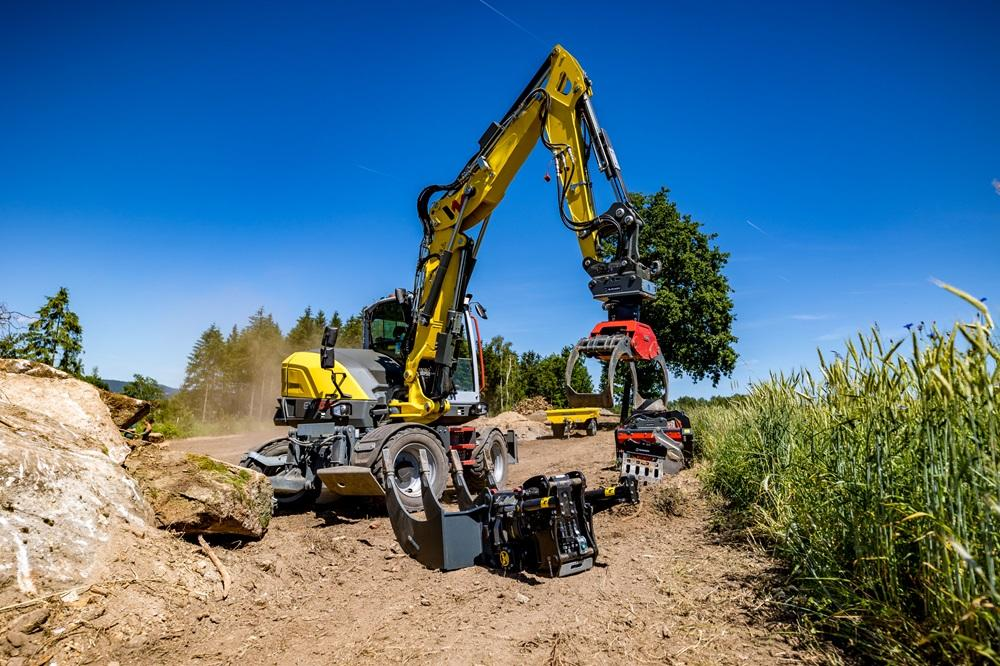
What makes a hydraulic power tilt coupler the right solution for a specific machine?
Tilt range matters, but it is only the beginning. A good Power Tilt solution should improve attachment flexibility without creating unnecessary compromises in digging performance, safety, installation, or long-term maintenance.
Here are the factors worth comparing before choosing one.
1. Best for Working Flexibility: Look Beyond the Tilt Angle
One of the biggest advantages of a hydraulic power tilt coupler is simple: move the attachment instead of repeatedly moving the excavator.
During grading, ditch cleaning, slope shaping, landscaping, trench finishing, and work around obstacles, a fixed attachment often forces the operator to reposition the entire machine just to achieve the correct bucket angle.
A Power Tilt coupler changes that workflow.
Systems offering up to 180° total tilt — 90° in either direction — give operators a much wider working envelope and allow many angle adjustments to be made directly from the cab.
But maximum tilt angle should not be considered alone.
OEMs should also look at:
-
Usable movement throughout the tilt range
-
Attachment clearance
-
Holding stability at different angles
-
Overall coupler height and geometry
The best solution is not simply the one that tilts the furthest. It is the one that turns that movement into useful working flexibility.
2. Best for Excavator Performance: Keep the Structure Compact
Every component installed between the excavator arm and bucket changes the machine geometry. That makes the height and weight of a tilt coupler especially important.
An oversized system can increase the distance between the stick and attachment, which may negatively affect breakout geometry, clearance, and the overall feel of the machine. This is one reason compact Power Tilt designs are increasingly important for excavator manufacturers.
WEITAI Hydraulic uses an integrated helical rotary actuator design in its Power Tilt solution. Instead of relying on a bulky external motor, reducer, or traditional linkage arrangement, the actuator is integrated directly into the tilting structure.
The result is a more compact way to add tilt functionality while helping preserve the excavator’s original working characteristics. For OEM projects, this matters just as much as the headline tilt angle.
3. Best for Safety: Ask What Happens When Hydraulic Pressure Is Lost
A hydraulic tilt coupler does more than move an attachment. It also has to keep that attachment securely connected during operation. That makes locking design one of the first areas an OEM should investigate.
A good hydraulic coupler should not depend on hydraulic pressure alone to prevent an attachment from dropping.
The WEITAI Hydraulic Power Tilt Coupler uses a dual-safety approach combining an active hydraulic locking mechanism with a passive mechanical anti-drop structure.
The principle is straightforward: hydraulic power controls normal locking operation, while the mechanical safety structure provides an additional layer of attachment retention.
For manufacturers evaluating Power Tilt solutions, the useful question is therefore not simply: “Is it hydraulically locked?”
Ask instead: What protects the attachment if hydraulic pressure is lost?
4. Best for Hydraulic Protection: Consider What Happens Under Shock Loads
Excavator attachments rarely work under perfectly steady loads.
A bucket can hit rock. A grading attachment can encounter an unexpected obstruction. Demolition work can introduce sudden external loads into the tilt mechanism. These events can create pressure spikes inside the hydraulic circuit.
For this reason, hydraulic protection should be part of any serious Power Tilt comparison.
WEITAI’s WPT07, for example, incorporates an integrated cross-port relief valve designed to help protect the tilt mechanism against hydraulic overload. Its integrated rotary union also allows hydraulic flow to pass through the tilting structure while reducing the need for exposed hose movement around the rotation point.
For OEMs, both features can contribute to a cleaner and more protected hydraulic layout.
5. Best for Maintenance: Fewer Complicated Components Matter
Purchase price is only one part of the cost of a tilt coupler. The more important question over the life of the machine is: What happens when something eventually wears?
Traditional assemblies with multiple external components, bearings, motors, or transmission elements can create additional maintenance points.
A modular Power Tilt architecture can simplify this. WEITAI’s solution is designed so that serviceable actuator or module components can be addressed without necessarily replacing the complete Power Tilt assembly.
For excavator manufacturers and attachment brands, this can help reduce:
-
Service complexity
-
Replacement component requirements
-
Machine downtime
-
Lifecycle maintenance cost
This becomes particularly important for equipment sold through dealer networks, where serviceability directly affects the customer’s ownership experience.
6. Best for OEM Integration: Don’t Choose by Excavator Tonnage Alone
“Suitable for 5-ton excavators” is not enough information to specify a Power Tilt coupler.
Two excavators in the same weight class can have different:
-
Pin diameters
-
Dipper widths
-
Pin centers
-
Hydraulic requirements
-
Attachment interfaces
-
Working geometries
A Power Tilt supplier therefore needs to understand more than machine tonnage.
WEITAI develops its WPT Power Tilt Series, including different WP, WT, and WBV configurations, around different excavator and attachment requirements.
For manufacturers developing a new model, the supplier should be able to work from machine specifications and mounting requirements rather than forcing the machine around an existing off-the-shelf coupler. That engineering capability can be more valuable than having hundreds of nominal model numbers in a catalogue.
Conclusion: What Is the Best Hydraulic Power Tilt Coupler?
For an excavator OEM, there is no universal winner. The best hydraulic power tilt coupler is the one that achieves the right balance between:
Tilt Range + Compactness + Holding Performance + Safety + Hydraulic Protection + Maintainability + Machine Compatibility
A large tilt angle may look impressive on a specification sheet. But if the system adds excessive height, complicates maintenance, or does not integrate properly with the machine, that number alone means very little.
That is why WEITAI Hydraulic approaches Power Tilt as an excavator integration solution rather than simply another attachment component.
With up to 180° total tilt, an integrated hydraulic rotary actuator, safety-focused locking architecture, overload protection, and configurations for different excavator applications, the WEITAI WPT Power Tilt Series is designed for manufacturers and attachment suppliers looking to add greater working flexibility without unnecessarily complicating the machine.
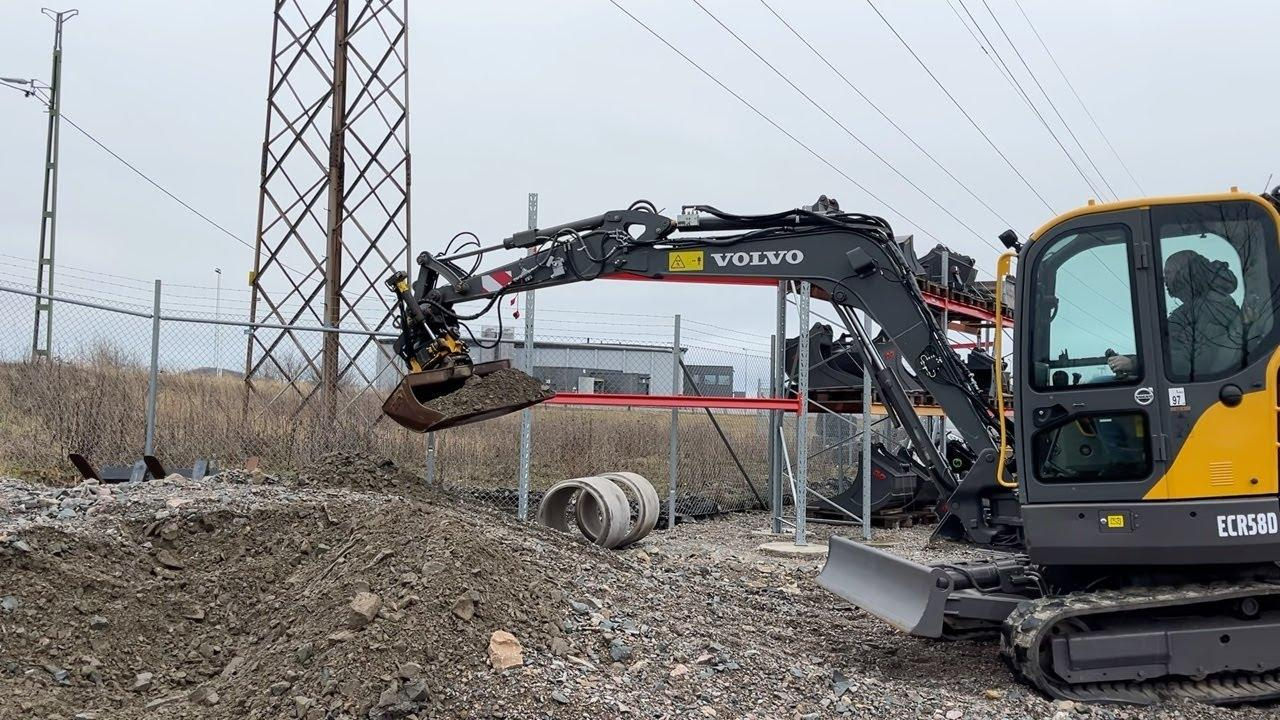
Looking for a Power Tilt Solution for Your Excavator?
Choosing the right Power Tilt starts with the machine — not the catalogue.
Send us your excavator model, machine weight, mounting dimensions, attachment interface, and required tilt range. WEITAI’s engineering team can help evaluate the appropriate Hydraulic Power Tilt configuration for your application.
Explore WEITAI Hydraulic Power Tilt Solutions →
Post time: Sep-04-2026