Hydraulic actuators are widely used in equipment that requires controlled rotation, tilting or positioning within a compact space. Construction machinery, agricultural equipment, material-handling systems and mobile hydraulic machines all use rotary actuators to move attachments, couplers, arms and other rotating structures.
For equipment manufacturers, the main requirement is not simply finding an actuator that can rotate. The actuator also needs to match the machine’s torque demand, rotation range, mounting structure, available space and hydraulic system. A hydraulic actuator factory therefore needs a product range capable of serving different machines, while also supporting OEM and replacement projects when standard configurations are not enough.
Hydraulic Rotary Actuators for Compact Motion
Hydraulic rotary actuators convert hydraulic pressure directly into rotary motion. Compared with a cylinder-and-linkage mechanism, they can reduce the number of external moving parts and make the overall structure more compact.
This makes them suitable for applications such as attachment rotation, tilting mechanisms, boom positioning, pipe handling, material handling and other equipment where controlled angular movement is required.
Helical hydraulic rotary actuators are commonly used in these applications because they combine torque output and rotary movement in one compact unit. Different applications may require different torque levels, rotation angles and mounting styles, so actuator selection normally begins with the machine rather than with one fixed product model.
Different Equipment Requires Different Actuator Configurations
A compact attachment and a heavy construction mechanism may both need rotary movement, but their actuator requirements can be very different. Smaller equipment may place more importance on compact size and low weight, while heavier machinery may require greater driving torque, holding capability and structural load capacity.
Rotation requirements also vary. Some mechanisms only need limited angular adjustment, while others may require 180°, 220° or a wider range. Selecting the largest actuator or widest rotation angle is not automatically better; the actuator should match the movement the machine actually needs.
Mounting is equally important. Flange-mounted, foot-mounted and shaft-output configurations fit different machine layouts. For OEM equipment, an actuator that matches the available space and existing structure can reduce unnecessary changes to brackets, hydraulic hoses and surrounding components.
Hydraulic Actuators in Construction and Mobile Equipment
Construction attachments are one of the main application areas for hydraulic rotary actuators. Tilting buckets, couplers and other attachments need controlled angular movement so the operator can adjust the working angle without constantly repositioning the machine.
This is particularly useful in grading, trenching, landscaping and slope work. The actuator allows the attachment to change angle while the excavator remains in position, improving the usable working range of the attachment.
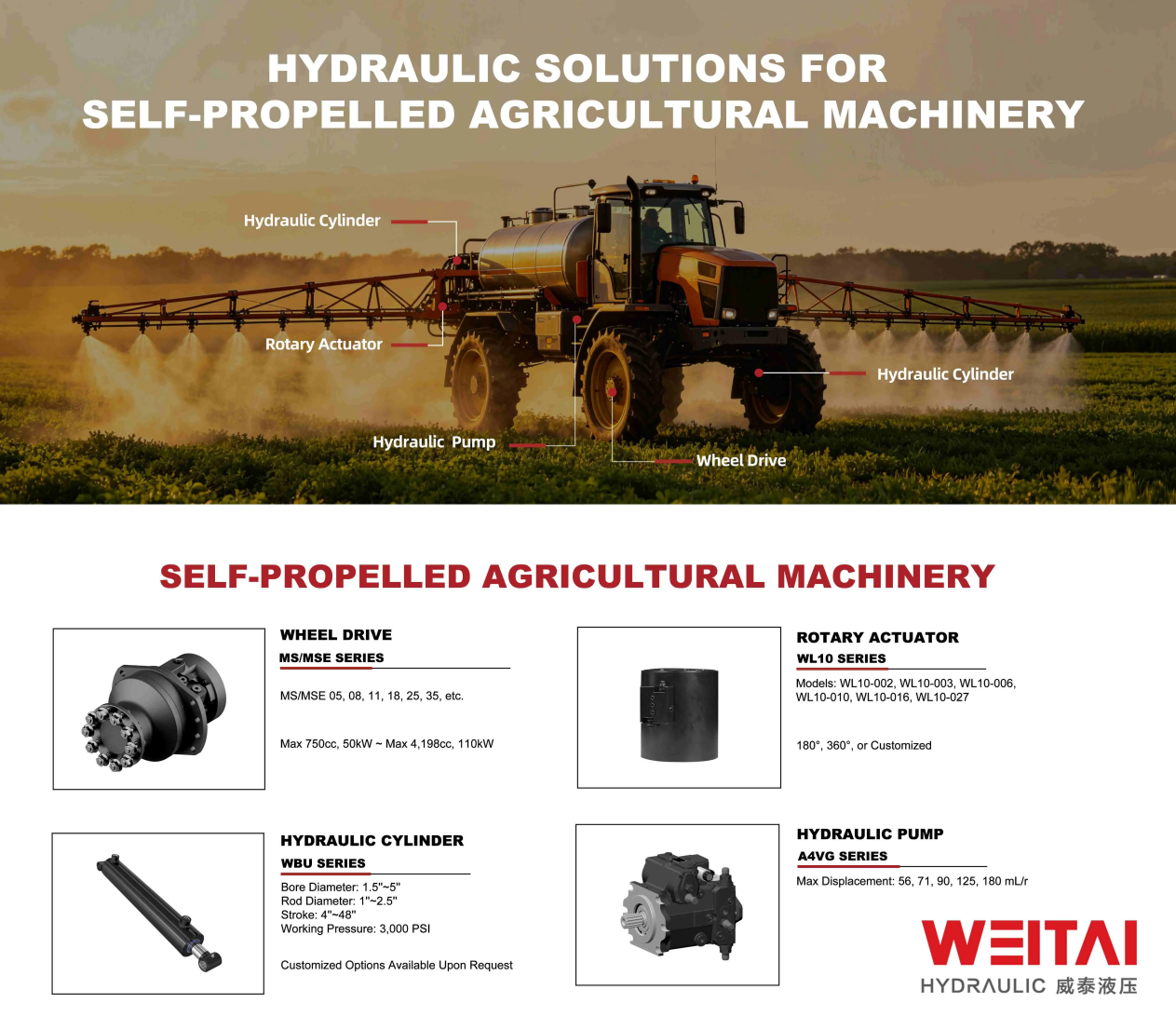
Mobile and agricultural equipment can use the same type of rotary motion for positioning, steering, handling or adjustment functions. The required actuator size depends on the load, machine geometry and operating conditions rather than the industry name alone.
From Rotary Actuators to Power Tilt Solutions
Hydraulic rotary actuator technology can also be integrated into more complete attachment systems such as power tilt and tilt couplers.
A power tilt system allows the attachment to tilt hydraulically around its connection point. When combined with a coupler, the system can provide attachment connection and tilt movement in a compact assembly.
For OEM manufacturers, this type of system requires the actuator and attachment structure to work together. Rotation range, installation width, load direction and hydraulic connections all affect how easily the system can be integrated into the machine.
This is why actuator manufacturers serving construction equipment often need both general rotary actuator products and application-specific tilt solutions.
Standard Models and OEM Projects
Not every project needs a fully customized actuator. If an existing model already provides the required torque, rotation range, mounting style and hydraulic compatibility, using a standard configuration is usually more practical.
OEM support becomes important when the equipment has fixed installation space, a different mounting interface or specific hydraulic requirements. In these cases, the project may start from an existing actuator platform and adjust only the parts that affect machine integration.
This approach helps avoid unnecessary redesign while still allowing the actuator to fit the equipment correctly.
WEITAI Hydraulic Actuator Range
WEITAI supplies hydraulic rotary actuators for construction machinery, attachments and other mobile hydraulic applications.
The WL Series covers different torque and installation requirements. WL10 and WL20 are suited to more compact rotary applications, while WL30 and WL40 provide larger configurations for equipment requiring higher torque and different rotation ranges.
For excavator attachment applications, WEITAI also provides hydraulic tilt and power tilt solutions. The WP Series and WBV Series are designed for different excavator and attachment requirements, allowing actuator size and structure to be matched to the machine rather than relying on one universal configuration.
This product range gives OEM customers a practical starting point: use an existing model when possible, then evaluate project-specific changes only when the machine requires them.
Replacement and Alternative Actuator Projects
Some buyers are not developing new machines but replacing an existing hydraulic actuator. The original model may be discontinued, difficult to source or no longer suitable for the current supply plan.
A replacement should not be selected by appearance alone. Mounting dimensions, output connection, torque, rotation range, hydraulic ports and operating conditions all need to be checked before confirming compatibility.
If the original model or drawing is available, it can provide a direct basis for comparison. When detailed documentation is unavailable, machine dimensions, actuator measurements and working conditions can still be used to evaluate an alternative.
The goal is to find a replacement that works with the existing machine while minimizing unnecessary structural changes.
What Information Helps With Actuator Selection and Quotation?
A more complete project inquiry makes it easier to identify the correct actuator and avoid repeated technical confirmation. Useful information includes:
- machine type and application;
- required torque or load condition;
- target rotation range;
- available installation space;
- mounting and output connection;
- hydraulic pressure and flow;
- existing actuator model or drawing for replacement projects;
- estimated order quantity.
For early-stage OEM projects, not every parameter needs to be finalized before the first discussion. Machine drawings, application information and installation space can already provide a useful starting point.
OEM, Custom and Batch Supply
For equipment manufacturers, hydraulic actuator supply may begin with one prototype but later expand into regular production. Once the actuator configuration has been confirmed, maintaining the same mounting, hydraulic and performance requirements becomes important for repeated orders.
WEITAI supports standard actuator supply, OEM configurations, replacement evaluation and batch purchasing for mobile hydraulic equipment. Different actuator sizes can also be matched across equipment families where several machine models require different torque levels.
For projects involving OEM hydraulic actuators, custom hydraulic rotary actuators, replacement actuators, alternative models or batch supply, machine information, existing drawings or actuator specifications can be used to confirm the suitable configuration and quotation.
Conclusion
A hydraulic actuator factory should provide more than one rotary actuator model. Construction equipment, mobile machinery and OEM systems require different combinations of torque, rotation range, mounting style and hydraulic conditions.
Standard products are often the most practical choice when they already fit the machine. OEM adjustments become useful when installation or hydraulic requirements differ, while replacement projects require careful compatibility checks against the existing actuator.
WEITAI provides multiple hydraulic rotary actuator and tilt solution series for these different applications, supporting standard supply, OEM projects, replacement evaluation and batch purchasing.
FAQ
Does WEITAI support OEM hydraulic actuator projects?
Yes. OEM projects can be evaluated according to machine application, torque requirements, rotation range, installation space and hydraulic conditions. Standard models can be considered first before project-specific changes are introduced.
Can WEITAI provide a replacement for an existing hydraulic actuator?
Yes. Replacement or alternative evaluation can begin from the original actuator model, drawing, mounting dimensions and operating requirements. Compatibility should be confirmed before using another actuator as a direct replacement.
Can mounting and rotation requirements be customized?
Project-specific mounting and rotation requirements can be evaluated when standard configurations do not fit the machine. The final setup depends on actuator size, torque requirement, available space and hydraulic conditions.
How can I request a hydraulic actuator quotation?
Provide the machine application, required torque or load information, rotation range, mounting requirements, hydraulic conditions and expected quantity. For replacement projects, the original actuator model or drawing can make the evaluation more direct.
Post time: Oct-28-2026